Stories, Poems & the Wider World
A Common Place
A blind woman works the phones at a taxi dispatch, with every street of her city mapped in her head.
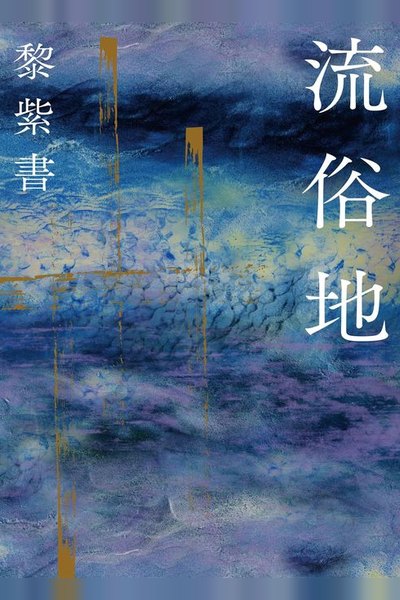
This is a novel by Li Zishu, a Malaysian writer who writes in Chinese. It's set in Ipoh, a hill town once famous for its tin mines. Yinxia, who is blind, grows up in a noisy, crowded old block of flats where every kind of person lives. She can't see, so she learns the world by sound: whose slippers, whose cough, who's fighting downstairs. As an adult she becomes a taxi dispatcher. A passenger gives an address and she draws the whole route in her mind.
The novel opens with a call coming in. Yinxia recognizes the voice instantly. It's Dahui, who vanished years ago and whom everyone assumed was dead.
Around her is a whole cast who grew up in the same building: soft-hearted, timid Xihui; an Indian boy with a gift for language who translates back and forth among the Chinese, Malay and Indian kids; a warm, worldly lottery-ticket auntie who switches between several dialects. As children they read and played chess in a barbershop. As adults they scatter, and their fates end up worlds apart.
Li doesn't turn Yinxia into a saint who "sees with her heart." She's stubborn, she wants things, she misjudges people, and she carries a wound she hasn't been able to talk about for years. One scene has stayed with me: an elevator stalls in a blackout, and in the pitch dark the sighted man trapped with her panics, while Yinxia grows calm and says one sentence to him.
"Common" doesn't mean vulgar. It means life as it actually is. Human ties come with calculation and with warmth, and the warmth doesn't smooth over every wound. That imperfection is what makes it real.
A city is made of sounds. When the familiar voices disappear one by one, the city changes. After this book I started noticing the sounds around me that I may not hear for much longer.
Literature may not change anyone's fate, but it lets ordinary people leave an echo. People who will never make it into a history book get looked at closely and seriously here.
Read it if you love novels that capture a whole city and its people, like Jin Yucheng's Blossoms (the Shanghai epic Wong Kar-wai adapted for TV), or if you're curious about Chinese life in Southeast Asia, a world close to China yet rarely seen.
Welcome to my world.