Motivation, the Brain & the Systems Around Us
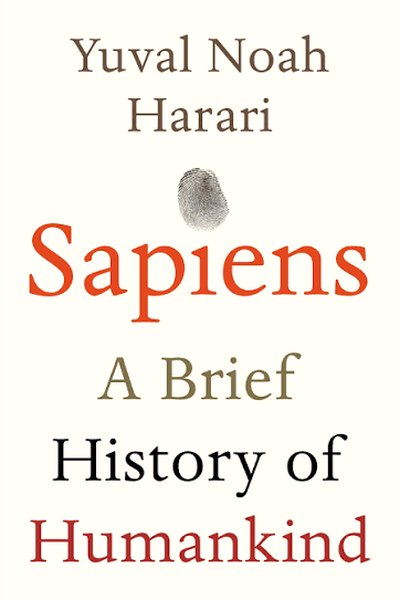
Sapiens: A Brief History of Humankind
You could never convince a monkey to hand over its banana by promising it unlimited bananas in monkey heaven after it dies.
Humans, though, will believe it. And that, Harari says, is the secret of how Sapiens came to rule the planet.
Harari is a historian at the Hebrew University of Jerusalem. The book first came out in Hebrew in 2011, and when the English edition arrived in 2014 it took over the world. He wanted to tell hundreds of thousands of years of human history in one book: how an unremarkable species ended up where we are today.
He splits that history into three revolutions. The Cognitive Revolution, about 70,000 years ago, gave Sapiens the ability to tell stories. The Agricultural Revolution, about 10,000 years ago, tied us to the land. The Scientific Revolution, 500 years ago, was the first time we admitted "we don't know," and it gave us unprecedented power.
Our greatest ability is believing in shared fictions. Chimpanzees rarely cooperate in groups larger than a few dozen individuals who know each other. Total strangers who are Sapiens can cooperate because they believe in the same god, the same nation, the same company, the same currency. Harari's example is Peugeot. You could replace every factory, every employee and every executive, and Peugeot would still exist, because it only ever existed in our shared imagination.
The Agricultural Revolution may have been "history's biggest fraud." We didn't domesticate wheat; wheat domesticated us. Farmers worked harder and ate a duller diet than foragers, and all they got in return was more people.
Luxuries become necessities. Every invention meant to make life easier eventually turns into a new obligation.
The book has plenty of critics. Professional historians fault it for covering too much ground and for stating some conclusions with too much confidence. But its value was never that every detail is right. It's that it gives you a wide enough lens to take a second look at everything you assume is just how things are.
After reading it, I saw a lot of things differently. Companies, money, borders, what counts as "success": they're all stories humans tell and believe together. They're real, and they're powerful, but they aren't laws of nature. Knowing that is oddly freeing. If it's a story, it can be told differently.
That's also why it sits in this group. If Thinking in Systems told me the highest leverage for changing a system is changing its paradigm, Sapiens shows me how those paradigms get told, generation after generation.
Read it if you've ever lain awake wondering why we live the way we do.
"We did not domesticate wheat. It domesticated us."