Motivation, the Brain & the Systems Around Us
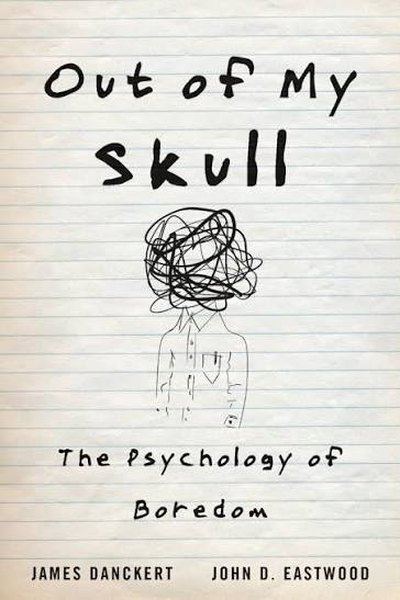
Out of My Skull: The Psychology of Boredom
In 1990, a young drummer named Paul drove his car into a tree and suffered a serious head injury. Once his wrist healed, he sat back down at the drums, but the joy never came back. He kept saying the same thing: I'm so bored.
His brother James was 18 that year. Years later, James Danckert became a cognitive neuroscientist at the University of Waterloo in Canada, and he asked about twenty young people with brain injuries whether they got bored more easily than before. Every one of them said yes. Together with John Eastwood, a psychologist at York University in Toronto, he spent years studying the thing that seems least worth studying, and this book is the result.
First they clear up a misunderstanding. Boredom isn't having nothing to do. Bored people usually know there are plenty of things they could do; they just can't get into any of them. The authors' definition: wanting to engage in something satisfying, and not being able to. On one side is a "desire conundrum": you want to do something, but not just anything. On the other, your mind is sitting idle, with nowhere to put its abilities.
How unpleasant is it? A famous 2014 experiment published in Science asked people to sit alone in an empty room for 15 minutes with nothing to do but think. There was a button that would give them an electric shock, and every participant had said beforehand that they'd pay money not to be shocked again. The result: 67% of the men and 25% of the women pressed it at least once. One man shocked himself 190 times in 15 minutes.
Another experiment is even more telling. Two groups did the same dull task for about the same amount of time. The only difference was that one group could stop whenever they wanted. Just having the right to stop made that group noticeably less bored.
Boredom is a call to action. Like pain, it's a signal that the way you're engaging with the moment isn't working. The signal itself isn't the problem. The problem is how fast we rush to switch it off.
Be the fisherman, not the cork. A cork bobs on the sea, pushed around by the tide. A fisherman rows against the current and knows which shore he's heading for. At bottom, the authors argue, boredom is a crisis of agency.
Don't kill the messenger. Reaching for your phone the moment you're bored feels like a fix. Really you've handed your attention to something designed to capture it. Your sense of agency gets weaker, and next time you get bored even faster.
My own, less academic definition, which came to me while reading: you can't do what you want to do, and you have to do what you don't.
The book also quotes the Norwegian philosopher Lars Svendsen: humans are world-building creatures, and if everything is arranged for us in advance, we lose our grip on the world. That made something click for me. It's why all the good advice in the world rarely lands as hard as living through something yourself.
It changed how I see empty time, too. The authors point out that technology has turned time into a problem to be solved, so any unfilled moment feels inefficient, even scary. I'm more and more convinced we need some "non-time." Stopping isn't wasting. It might be the moment you finally hear what you actually want again.
Read it if you're busy all the time but couldn't say what you're busy with, or if a free hour makes you anxious and your hand goes straight for your phone.
Stop being the cork tossed around by the waves. Be the fisherman who chooses where to row.