Habits & Getting Started
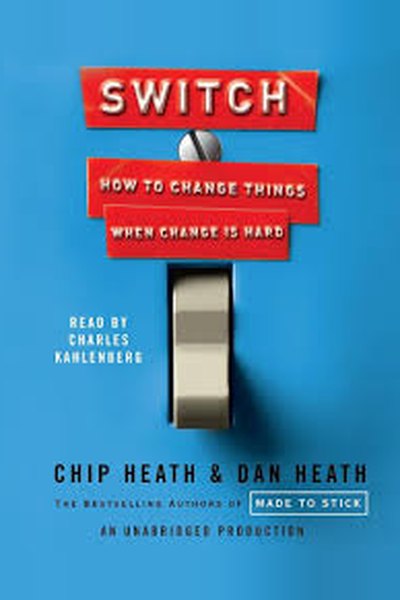
Switch
Why don't we change, even when we know better?
One Heath brother is a professor at Stanford's business school, the other a researcher at Duke. They borrow a metaphor from the psychologist Jonathan Haidt: each of us is a Rider on an Elephant. The Rider is reason. He plans and analyzes. The Elephant is emotion. It's powerful, but it only wants comfort right now. The Rider can tug the reins for a while, but in any long tug-of-war with the Elephant, the Rider loses.
So change means doing three things at once: Direct the Rider, Motivate the Elephant, Shape the Path.
The Rider needs direction, not more reasons. In 1990 Jerry Sternin went to Vietnam to fight child malnutrition with almost no resources. Instead of analyzing the big problems like poverty, sanitation and clean water, he looked for bright spots. In equally poor villages, why were some kids growing up healthy? It turned out their mothers added tiny shrimp, crabs and sweet-potato greens from the rice fields to meals, and fed the kids several smaller portions a day. So he had mothers teach other mothers. Don't ask what's broken. Ask what's working, and copy it.
The Elephant has to see it, not be argued into it. A purchasing manager wanted to convince senior leadership that the company was wasting money on procurement. Instead of a report, he piled all 424 kinds of work gloves used in its factories onto the boardroom table, each tagged with its price. Identical gloves cost $5 at one plant and $17 at another. The executives got it instantly. The book argues that change doesn't go analyze → think → change. It goes see → feel → change.
A lot of "people problems" are really situation problems. Fix the path and the Elephant walks it on its own.
Honestly, I only read half of this book carefully. The Rider and the Elephant were fascinating, but the later chapters overlap heavily with The Power of Habit and Atomic Habits, so I skimmed. That half was enough, though. Whenever I can't convince myself or someone else, I ask: is the Rider lost, is the Elephant tired, or is the path too hard?
Read the first few chapters if you're trying to push for change, whether in yourself or in a team.
What looks like resistance is often a lack of clarity. What looks like laziness is often exhaustion.