Habits & Getting Started
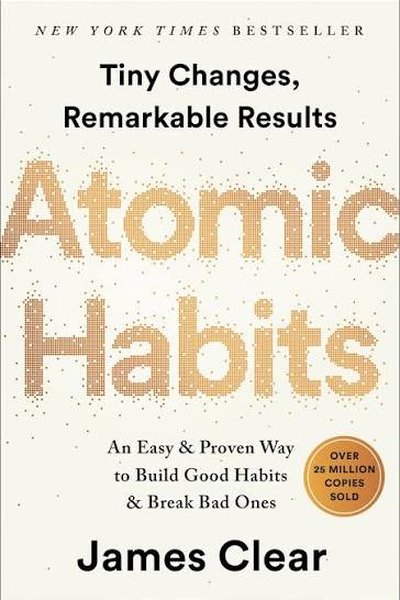
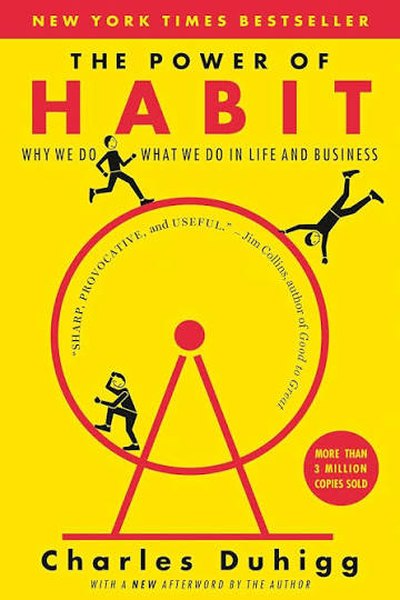
Atomic Habits + The Power of Habit
How much of what you did today did you actually decide to do?
A 2006 study from Duke University offers an uncomfortable answer: about 40% of our daily actions aren't decisions at all. They're habits. The hand that reaches for your phone in the morning, the few steps that steer you into the convenience store on the way home. That's not "you" calling the shots.
I've always thought these two belong together, because one explains the why and the other gives you the how.
Start with The Power of Habit. Duhigg is a New York Times reporter, and he opens with an MIT experiment on rats. The first time a rat runs a T-shaped maze to find chocolate, its brain is buzzing the whole way as it sniffs and scratches around. After a few hundred runs, the rat gets faster and faster while its brain gets quieter, lighting up only at the start and at the moment it finds the chocolate. The brain has bundled a whole chain of actions into an automatic routine. That's the habit loop: cue → routine → reward.
The best story in the book is about advertising. A century ago, most Americans barely brushed their teeth. Ad man Claude Hopkins told people to run their tongue across their teeth and feel the film. Toothpaste was given a minty tingle. What people got hooked on wasn't clean teeth. It was that cool, fresh, just-brushed feeling. What really drives a habit is craving.
Atomic Habits picks up from there. Clear stretches the loop into four steps, each with a law: make it obvious, make it attractive, make it easy, make it satisfying. His story about British cycling is about no single big overhaul, just getting a little better at every tiny detail. Improve 1% a day and after a year you're 37 times better.
You can't delete a habit. You can only replace it. Duhigg calls this the Golden Rule: keep the same cue and the same reward, and swap out the routine in the middle. Instead of going head-to-head with a bad habit, find a new action that meets the same need.
Don't overrate willpower. Design your environment. Clear says many people think they lack motivation when what they really lack is a clear plan: when, where, and what. In the book, the choreographer Twyla Tharp says her daily ritual isn't the two hours in the gym. It's the moment she hails a cab and gives the driver the address. Reading that, I thought of the moment I step out the door to head to the library. The hard part was never the hours. It's getting out the door.
Habits are built by repetitions, not by days. Forget "21 days to form a habit." What counts isn't how many days you've kept it up, but how many times you've done it. Hence Clear's two-minute rule: shrink any new habit to under two minutes. "Read every night" becomes "read one page."
You're not hitting a goal. You're becoming someone. This is the idea that changed me most. Habits matter because they help you become the kind of person you want to be. Every repetition is a vote for "I'm someone who reads" or "I'm someone who exercises."
What these two books really did for me was help me forgive the version of me who could never stick with anything. Here's how I see it now: why is it so hard to keep going? Because you're impatient for results, and when they don't show up the way you pictured, you get discouraged. Clear calls this the Valley of Disappointment. The work isn't wasted. It's still accumulating, just not visible yet. Once you understand that curve, you stop quitting one degree before the ice melts.
If you think you just don't have enough willpower, read The Power of Habit first to understand how it works, then Atomic Habits to put it into practice.
Every action you take is a vote for the type of person you wish to become.