Letting Go & Paying Attention
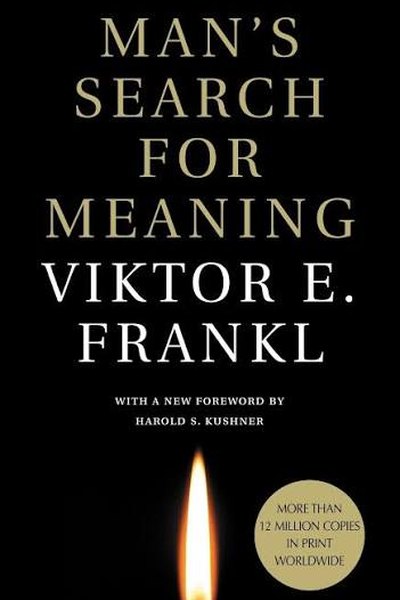
Man's Search for Meaning
When someone loses everything, what's left?
Viktor Frankl was a psychiatrist in Vienna. In 1942 he and his family were deported to the Nazi camps, and he passed through Theresienstadt, Auschwitz and subcamps of Dachau. His father died in Theresienstadt, his mother and brother in Auschwitz, his wife Tilly in Bergen-Belsen. Back in Vienna after the war, he wrote most of this book in nine days. It came out in 1946.
The first half is his own account of the camps. He saw something brutal and strange: some prisoners were convinced the war would be over by Christmas. When Christmas came and went, the death rate spiked. Their bodies were the same as the week before. What broke them was the collapse of meaning. He also describes being marched to work on freezing mornings, thinking only of his wife's face. He didn't even know if she was alive. And for the first time he understood that love can reach through anything.
The second half lays out logotherapy, the approach he developed from all this.
Your last freedom is choosing your attitude. Circumstances can take everything from you, except how you respond.
You don't think your way to meaning. You find it in three places. In work you do, in someone you love, or in the dignity with which you face suffering you can't avoid.
Once suffering has meaning, it stops being only suffering. An elderly doctor came to Frankl two years after his wife died, still unable to move on. Frankl asked him: what if you had died first? The doctor said that would have been terrible for her. Frankl said: you see, you've spared her that pain, and the price is that you're the one who survives to mourn her. The doctor shook his hand and left calmly.
Like happiness, success can't be pursued directly. It has to ensue. As he wrote in a later preface, the more you aim at it, the more you miss.
In 1991 a Library of Congress survey named it one of the ten most influential books in America. I read it alongside The Untethered Soul. Singer says you are the one watching your thoughts. Frankl says that in any situation, you still have the freedom to choose your attitude. Same idea, except Singer found it in the Florida woods and Frankl found it in a concentration camp. And Singer's company growing on its own once he let go of wanting it? That's "success can only ensue" in practice.
Read it if you're going through something you can't change and can only get through. It's short. You can finish it in an afternoon.
Everything can be taken from a man but one thing: the last of the human freedoms—to choose one's attitude…