Letting Go & Paying Attention
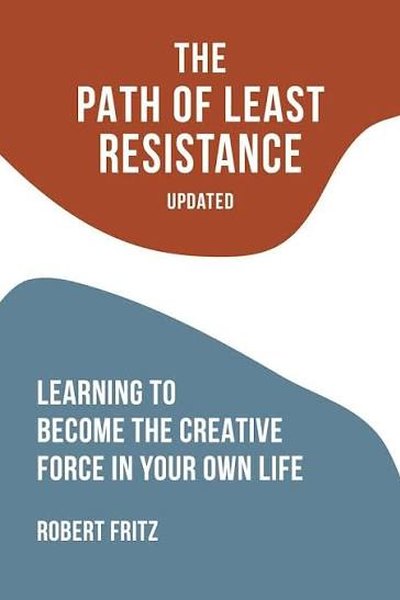
The Path of Least Resistance
Why does a river flow the way it does? Not because it wants to. Because that's the shape of the riverbed.
Robert Fritz is a composer who went on to study the creative process. In this 1984 book he starts from a simple observation: water, electricity and people all follow the path of least resistance. So if you want to change how someone behaves, gritting your teeth on willpower won't work. You have to change the riverbed underneath, the structure.
Most of us live in a reactive–responsive mode. When we don't like our circumstances, we either fight them or adapt to them. Either way, the circumstances are doing the steering. Fritz says there's another way to live: the creative orientation. A creator doesn't start from "What problem do I need to solve?" but from "What do I want to bring into being?" Jung put it nicely: many of life's problems are never solved. They're outgrown, replaced by something bigger as you move forward.
The gap between your vision and reality is fuel, not shame. This is the heart of the book, what Fritz calls structural tension. In one hand is the result you clearly want. In the other is an honest look at where you are now. Between them is a stretched rubber band. That tension has to resolve: either you lower the vision, or reality moves toward it. Fritz insists that seeing your current reality clearly matters just as much as seeing your vision clearly.
Why change keeps snapping back. Suppose you've got two rubber bands pulling at once. One leads to "I want this." The other leads to "I don't deserve it" or "I can't do it." The closer you get to the goal, the tighter the second one pulls, until it yanks you right back where you started. That's why so many people's efforts swing like a pendulum.
Reading it, I realized that blaming the outside world for inside problems is its own kind of escape. "Once I have money." "Once I retire." As if a change of scenery will turn me into the person I want to be.
I also noticed something more personal. Sometimes I hold back from spending all my time on what really interests me, because it doesn't seem to lead anywhere "useful." This book helped me see that's the reactive voice talking. It always asks "What's the point?" A creator only asks "Do I want this to exist?"
Read it if you keep telling yourself the timing isn't right yet.
Maybe creating is simply our nature, and we can build a new life in any circumstances.