Finding Your Work (and What Money Is For)
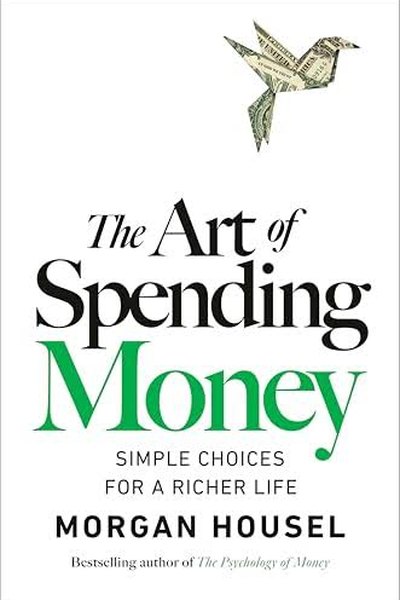
The Art of Spending Money
Morgan Housel says he has met about half a dozen billionaires. Not one of them, he thinks, is happier than his wife's grandmother, who spent thirty years of retirement living on roughly $1,700 a month in Social Security, taking walks and watching birds.
Housel is a partner at Collaborative Fund and the author of The Psychology of Money. That book was about how to save money and keep it. This one, published in 2025, covers the other half: once you have it, how do you spend it? There are almost no budget templates or formulas here. As he puts it, spreadsheets don't care about your feelings.
The book starts with a question: what have you experienced that I haven't, that makes you believe what you believe? Everyone's spending habits are a product of their history, and nobody is crazy. He quotes a 1920s newspaper headline that, roughly, says the more people were snubbed when they were poor, the more they enjoy showing off once they're rich. Spending is often a reply to who we used to be.
He shows the flip side too. The Vanderbilt heirs inherited a fortune worth around $300 billion in today's money. It decided where they lived, whom they married and how they spent their days, and most of them weren't happy.
Ask yourself: would I still buy this if nobody could see it? Housel asks you to imagine that, apart from your family, no one could see your house, your car or your clothes. Whatever you'd still want is what's really yours. Spending should express who you are, not perform for an audience.
Independence is the highest-return thing money can buy. His example is plain: if you get laid off with $1,000 in savings, you can spend a week looking for the right job instead of grabbing the first one. Independence isn't all or nothing. It's a spectrum, and every dollar of slack moves you a little further along it.
"Enough" isn't a number. It's a feeling. Plenty of people hit the savings goal they set and still don't feel safe, because the feeling doesn't arrive automatically with the number.
Over-saving is a trap too. Nobody hands out prizes for dying with the biggest account balance. You save so you can spend well, not so you can be afraid to spend.
Reading it, I kept coming back to the question of how much is enough. Housel describes his own setup: a sizable share in cash, a modest house with the mortgage paid off, and everything else in a total-market index fund. Lots of people find that much cash too conservative, but I love the reply: first ask yourself how much is enough. Another line I can't shake: if you keep checking on something, you're not truly rich.
To me, that cash isn't buying returns. It's buying calm, and the room to make decisions slowly even on bad days. This book helped me work out what I want that money to buy. My answer: time, options and a quiet mind.
Read it if you have a decent amount of money but never quite feel secure, or if you keep thinking "just a bit more and I'll be fine."
Wealth without independence is a unique form of poverty.