Finding Your Work (and What Money Is For)
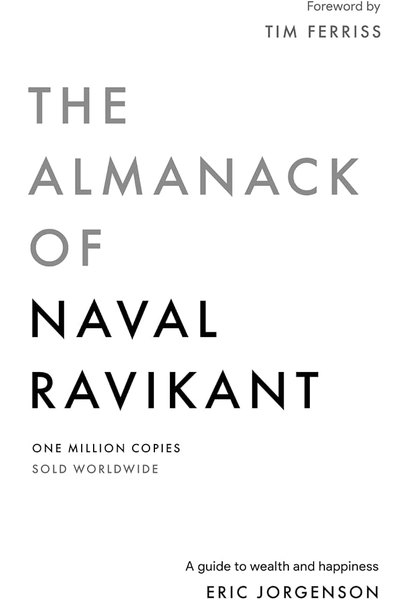
The Almanack of Naval Ravikant
A Silicon Valley investor who never planned to write a book ended up with one the whole world keeps passing around.
Naval Ravikant co-founded AngelList and was an early angel investor in a long list of well-known companies. In 2018 he posted a tweetstorm called "How to Get Rich (without getting lucky)," then expanded on it in podcasts. Eric Jorgenson gathered his scattered tweets, podcast answers and interviews into this book, published in 2020. The first half is about wealth, the second about happiness.
It reads fast, and nearly every line could go on a sticky note. Here are the ones I find most convincing:
Seek wealth, not money or status. In his definition, wealth is assets that earn while you sleep. Money is just how we move wealth around. Status is a zero-sum game. That one sentence untangles a lot of anxiety.
Specific knowledge can't be trained. If something can be taught in a course, someone else can be trained to replace you. Specific knowledge comes from your genuine curiosity, not from whatever's hot right now. If it feels like play to you and looks like work to others, that might be it.
Leverage multiplies your judgment. He sorts leverage into three kinds: labor, capital, and code and media. The first two need someone's permission. The last two don't. Code you write or a podcast you record can serve thousands of people at once. That's why judgment is worth the most: point in the wrong direction and more leverage just takes you further off course.
Play long-term games with long-term people. Trust, relationships and knowledge all compound, but only if you stay at the same table.
Happiness is a skill you can practice. Desire, he says, is a contract you make with yourself to be unhappy until you get what you want. So keep your desires few, and choose them carefully.
I especially love what he says about reading. The only reason to read should be that you love it. And he'd rather read the best 100 books over and over than read everything. That was a huge release for me. I used to read in a very goal-driven way, counting books and blaming myself when I couldn't get through a widely praised one. Now I reread more, and I'm much braver about putting down books that aren't for me.
I also like his idea that specific knowledge comes from curiosity. Do the thing that feels like play to you.
Read it if you want just one book on wealth and happiness and can't stand being lectured. The English edition is free to read on the official website.
Read what you love until you love to read.