2025.5
2025.5
 Ciao!Italy
BonjourFrance
안녕하세요Korea
Hello!Singapore
你好China
こんにちはPapa & Mama
Japan
Osaka, Kyoto and Tokyo, and a little house in between.
A House Full of Strangers
Osaka, Kyoto, Tokyo, and one table in between
Of all the places I visited in Japan, the one I think about most is a little old house in Kyoto.
It wasn't a famous temple or somewhere you'd find on a list of must-see attractions. It was a family-run guesthouse, tucked away in the city, with wooden floors, a small courtyard, and a living room full of things left behind by travellers from all over the world.
One evening, I came back after a long day of exploring and found a group of people sitting around the table.
There were travellers from Italy, France, Korea, Singapore, and China.
Our hosts were there too: an elderly Japanese couple who called themselves Papa and Mama. Somehow, we all ended up spending the evening together, talking about where we'd come from and what had brought us to Japan.
It was such a simple thing.
A few strangers, one table, a conversation that probably wouldn't have happened anywhere else.
But of everything I remember about Japan, that evening has stayed with me.
Perhaps I should start at the beginning.
Japan was a country I'd wanted to visit for a long time.
In May 2025, I finally made the trip, travelling from Osaka to Kyoto and then Tokyo.
My first impression was how beautifully organised everything seemed. The streets were clean, the public spaces were well maintained, and even the smallest details felt carefully considered.
I liked the quiet sense of order, the way everything seemed to have its place.
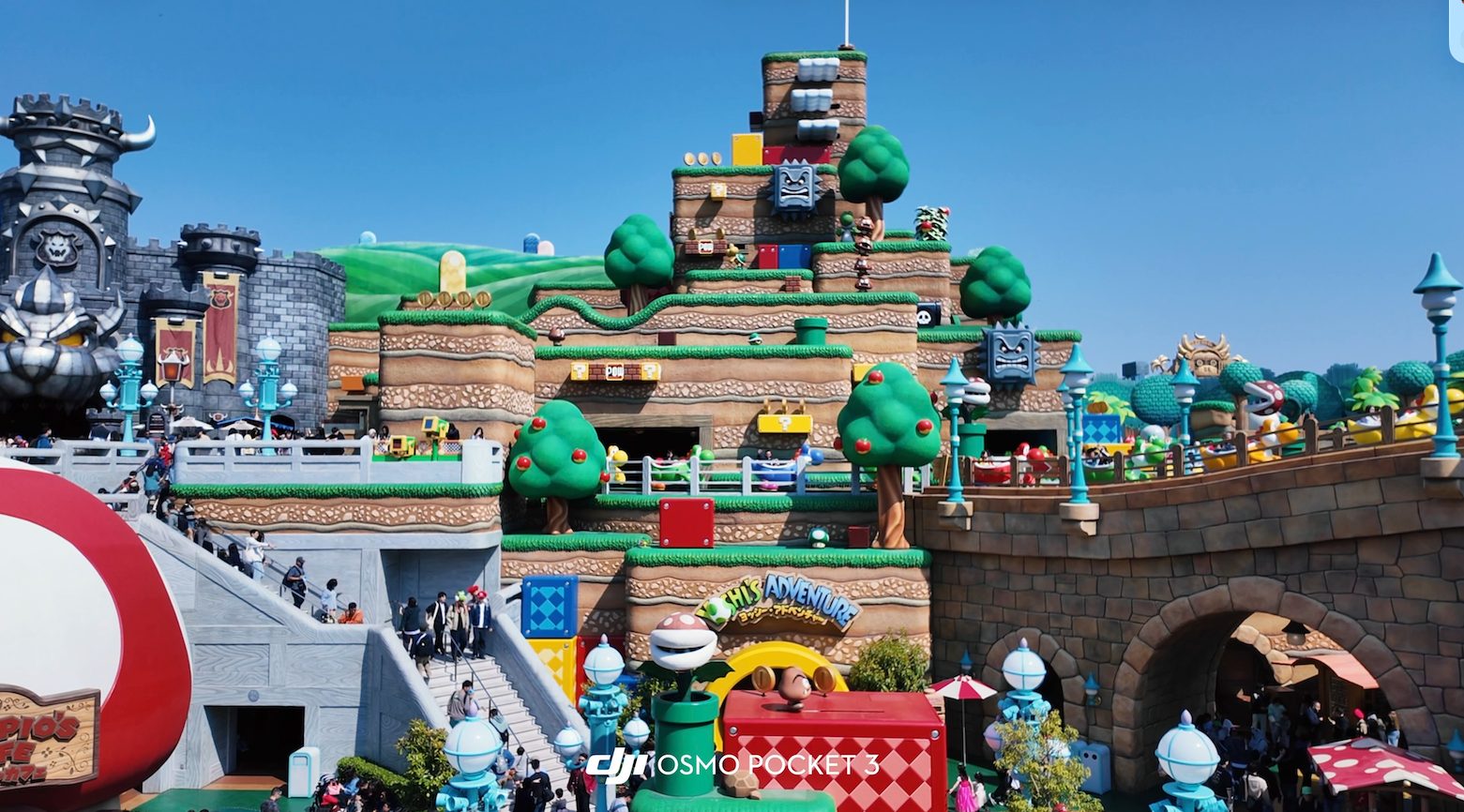
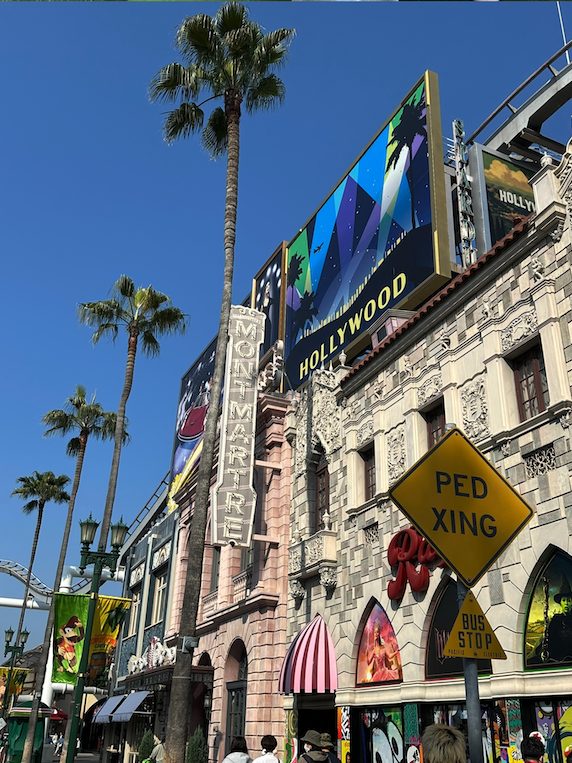
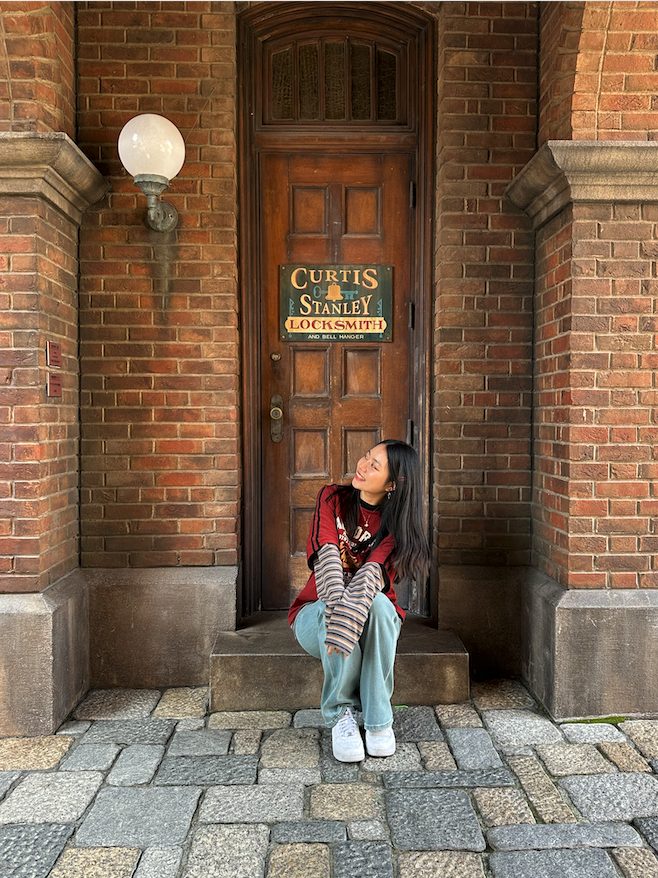
We didn't spend much time exploring Osaka itself. Most of our stay was devoted to Universal Studios Japan, which, frankly, was a very good decision.
I had an amazing time.
Super Nintendo World was particularly fun.
It felt as though someone had taken a video game and made it possible to walk right into it. Everything was bright, colourful, and wonderfully over the top.
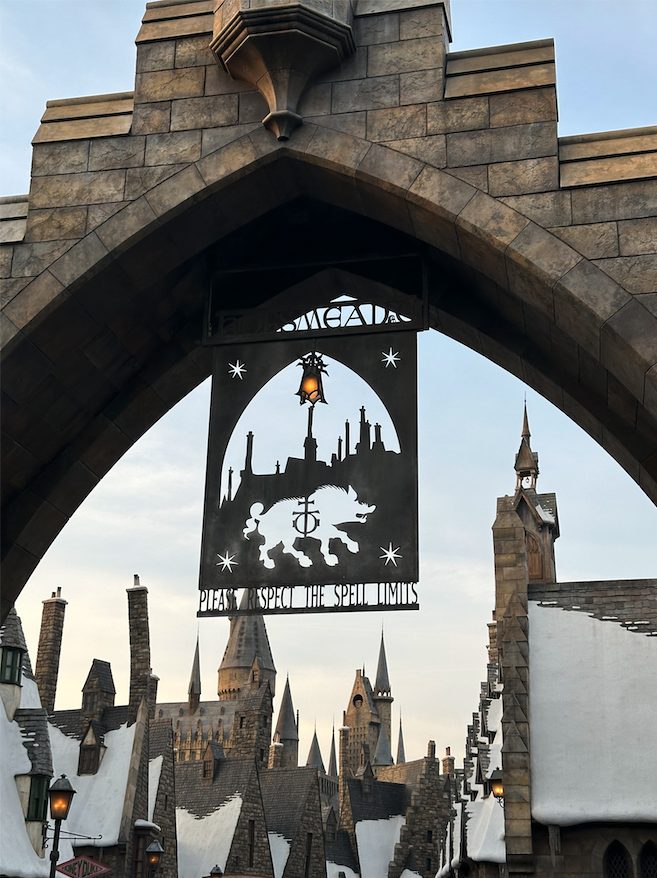
And then there was the Wizarding World of Harry Potter.
I've always loved the feeling of stepping into a fictional world, even when I know perfectly well that everything around me has been designed to create that illusion.
For a few hours, I was more than happy to play along.
We went on the rides, explored the themed areas, took photos, and had the kind of day where you're exhausted by the end but still don't want to leave.
Osaka was a lovely start.
But Kyoto was where I really fell in love with Japan.
Kyoto
All That Green
There's something about Kyoto that makes me want to slow down.
Maybe it's the old wooden houses, the narrow streets, the tiled roofs, or the little gardens hidden behind walls. Maybe it's the way traditional buildings remain part of everyday life, rather than existing only as things to be admired.
Whatever it was, I felt drawn to the place almost immediately.
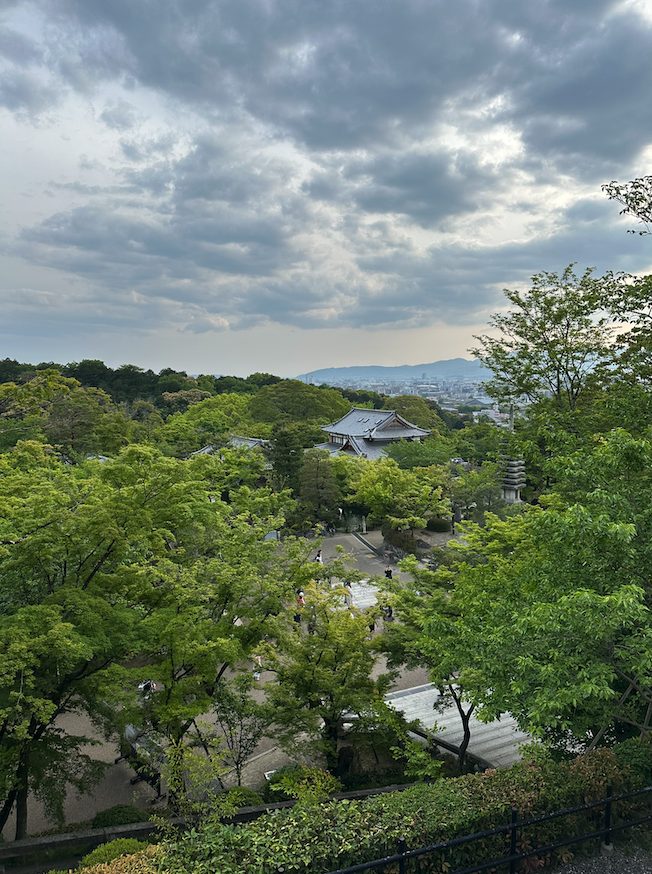
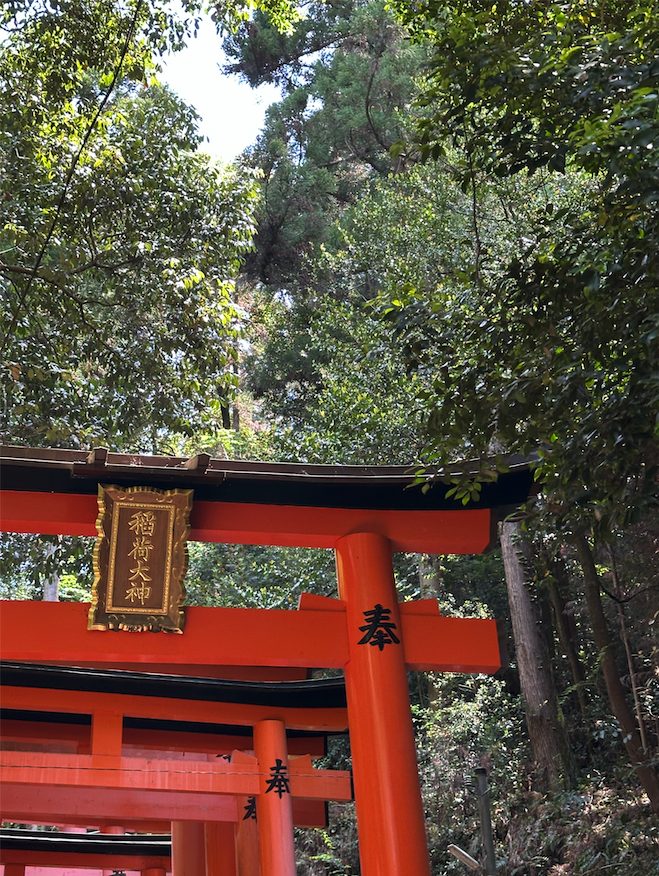
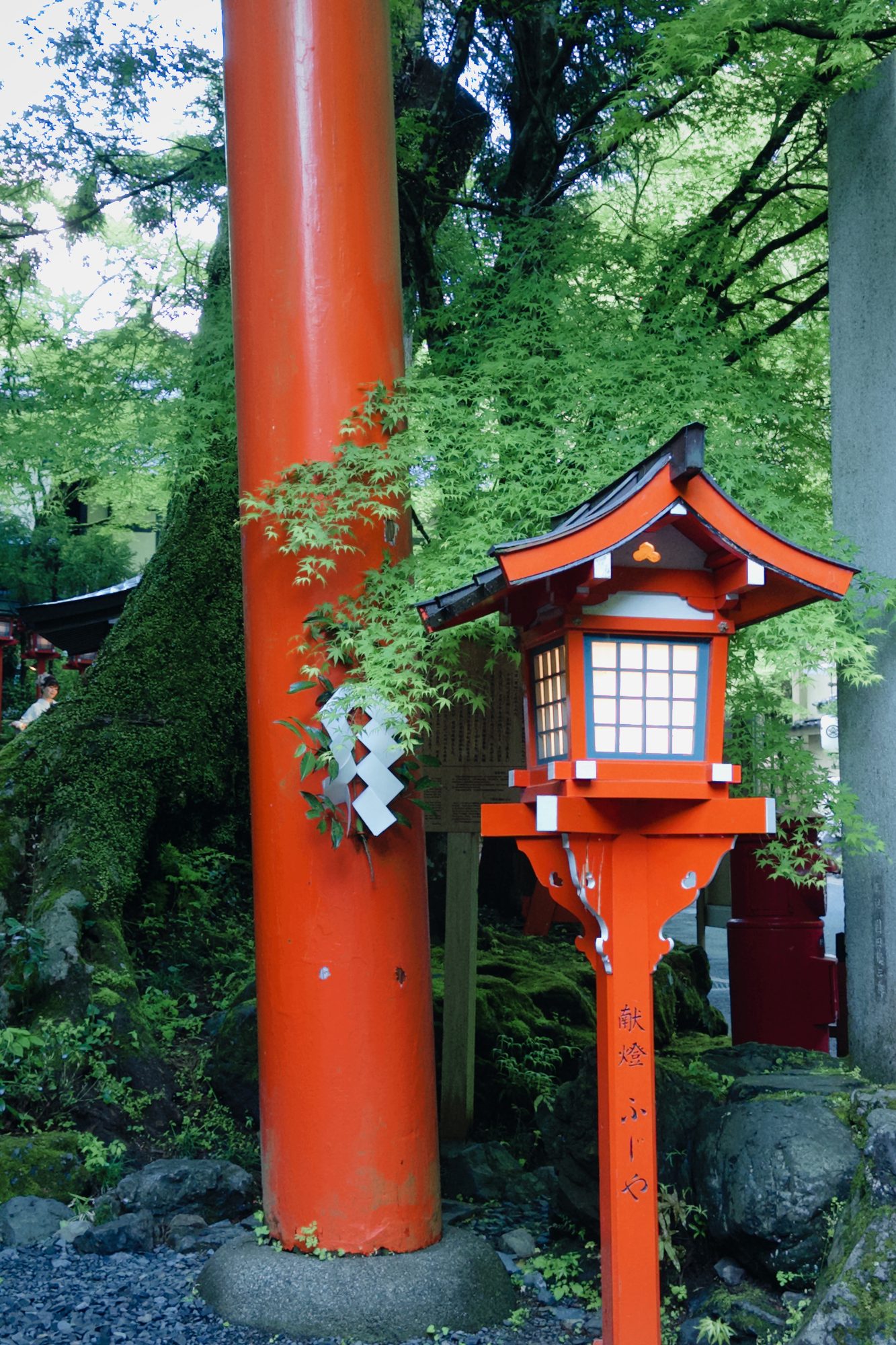
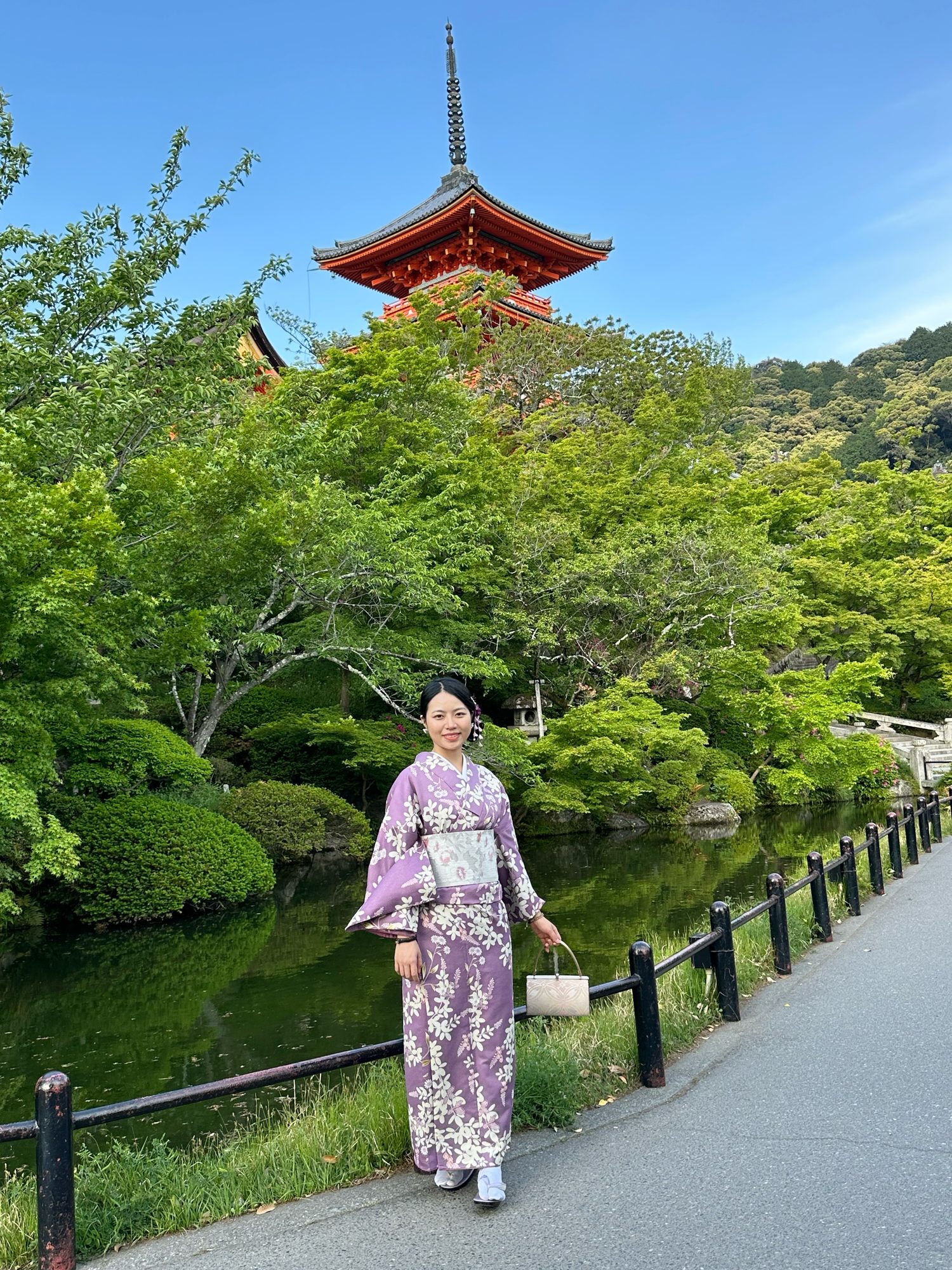
We visited Kiyomizu-dera, wandered through the old streets of Ninenzaka and Sannenzaka, and explored Fushimi Inari and other temples around the city.
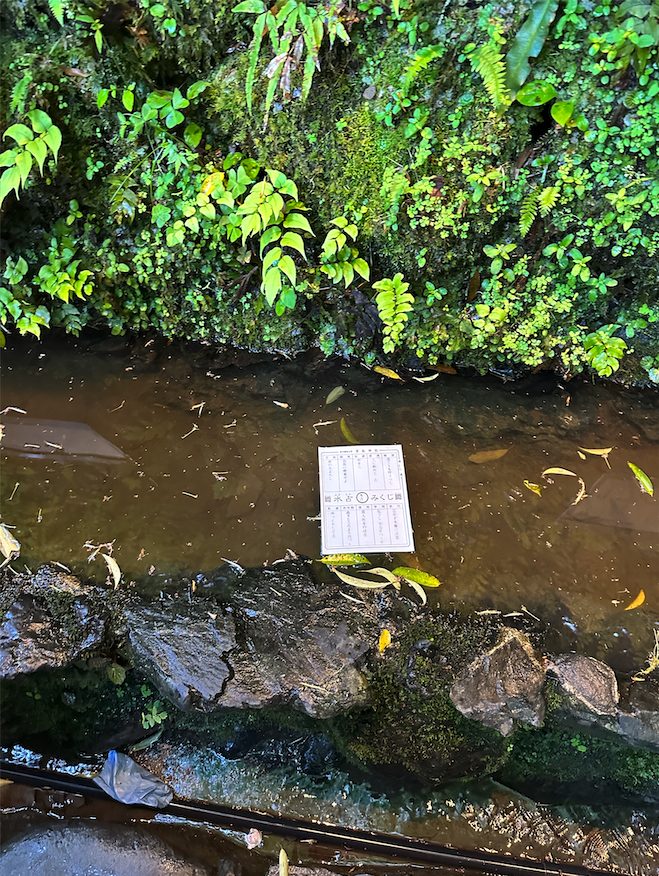
At Kifune Shrine, the fortune slip is blank until you float it on the spring water. Then the words appear.
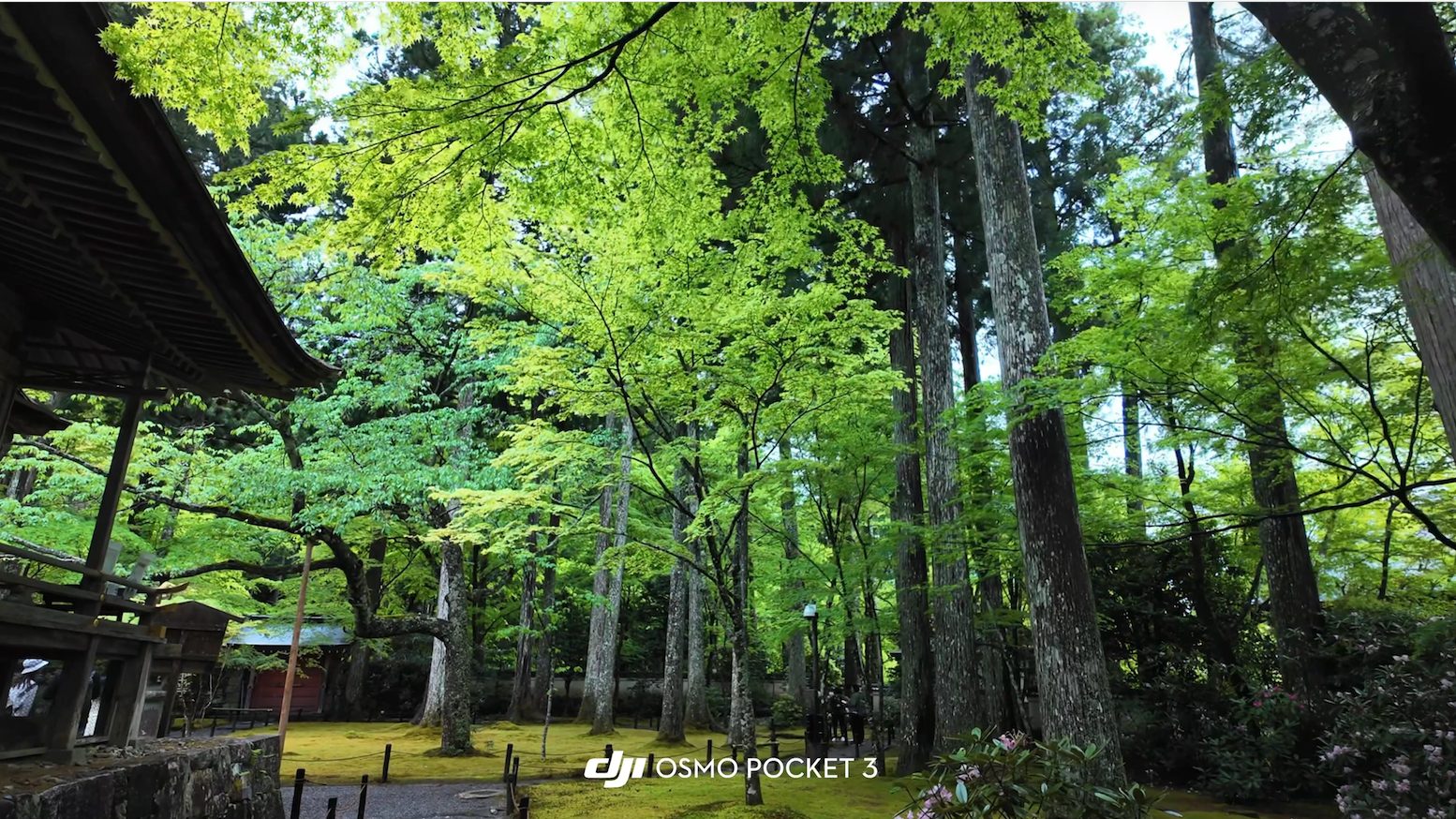
But my favourite place was Sanzen-in, a temple in Ohara, in the mountains north of central Kyoto.
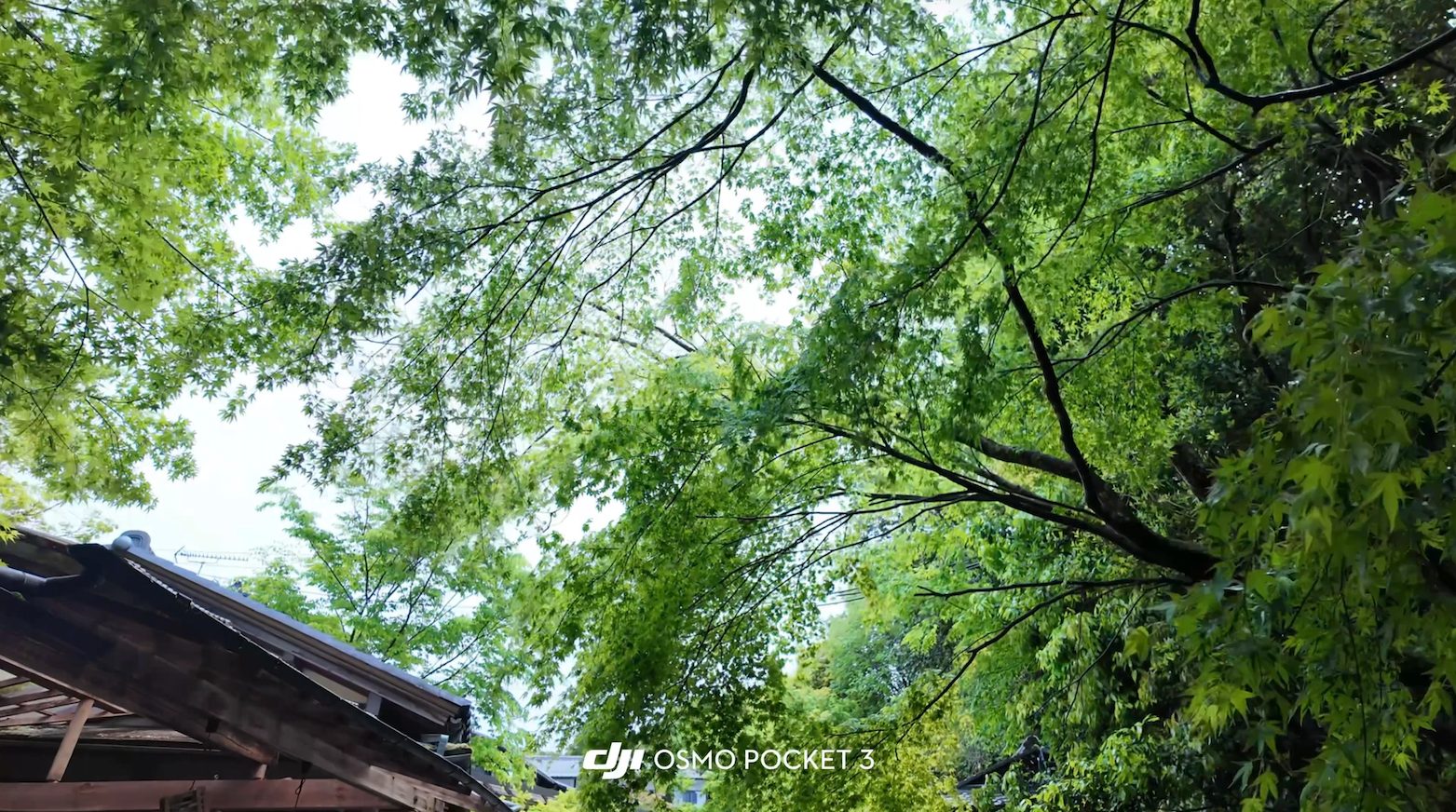
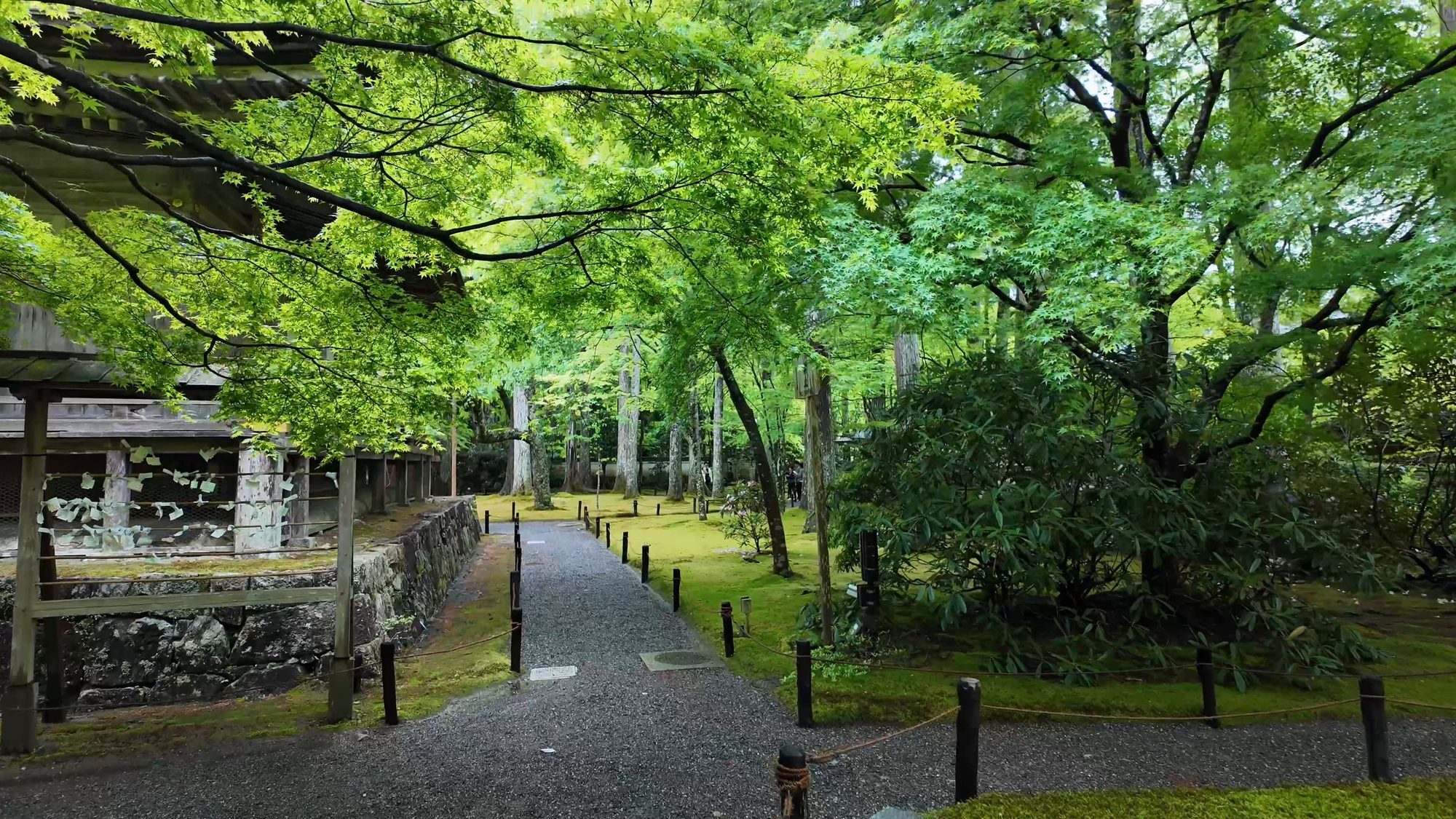
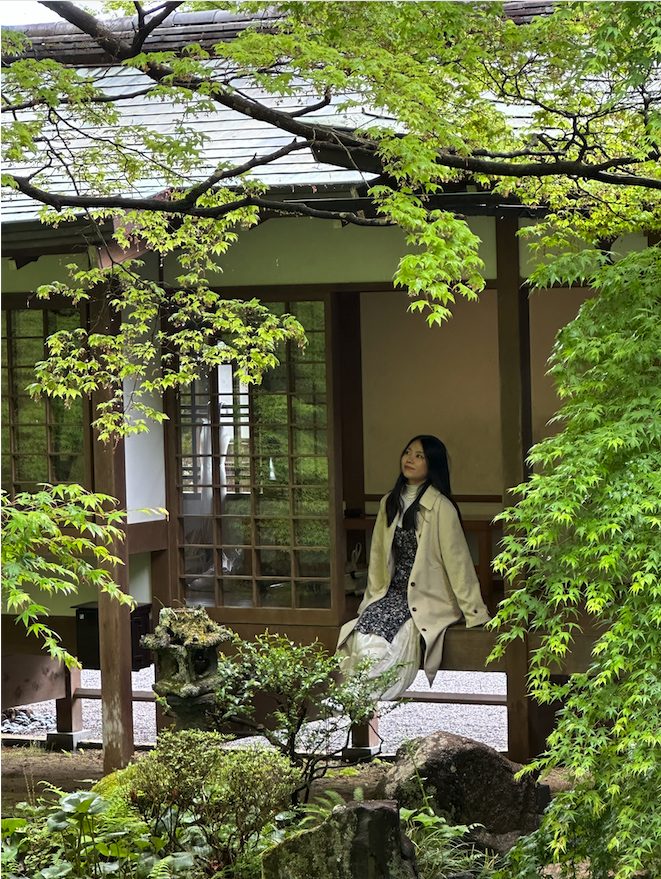
I still remember how green everything was.
Not just green in the ordinary sense, but an almost overwhelming amount of it.
Tall trees stretched overhead, their branches forming a canopy above the paths. The ground was covered in thick, soft moss. Stone steps, old walls, and little statues seemed to emerge from the greenery, as if they'd been there so long that the forest had quietly grown around them.
It was May, and everything looked fresh and full of life. The air felt wonderfully clean.
Sunlight filtered through the leaves, falling in little patches across the moss.
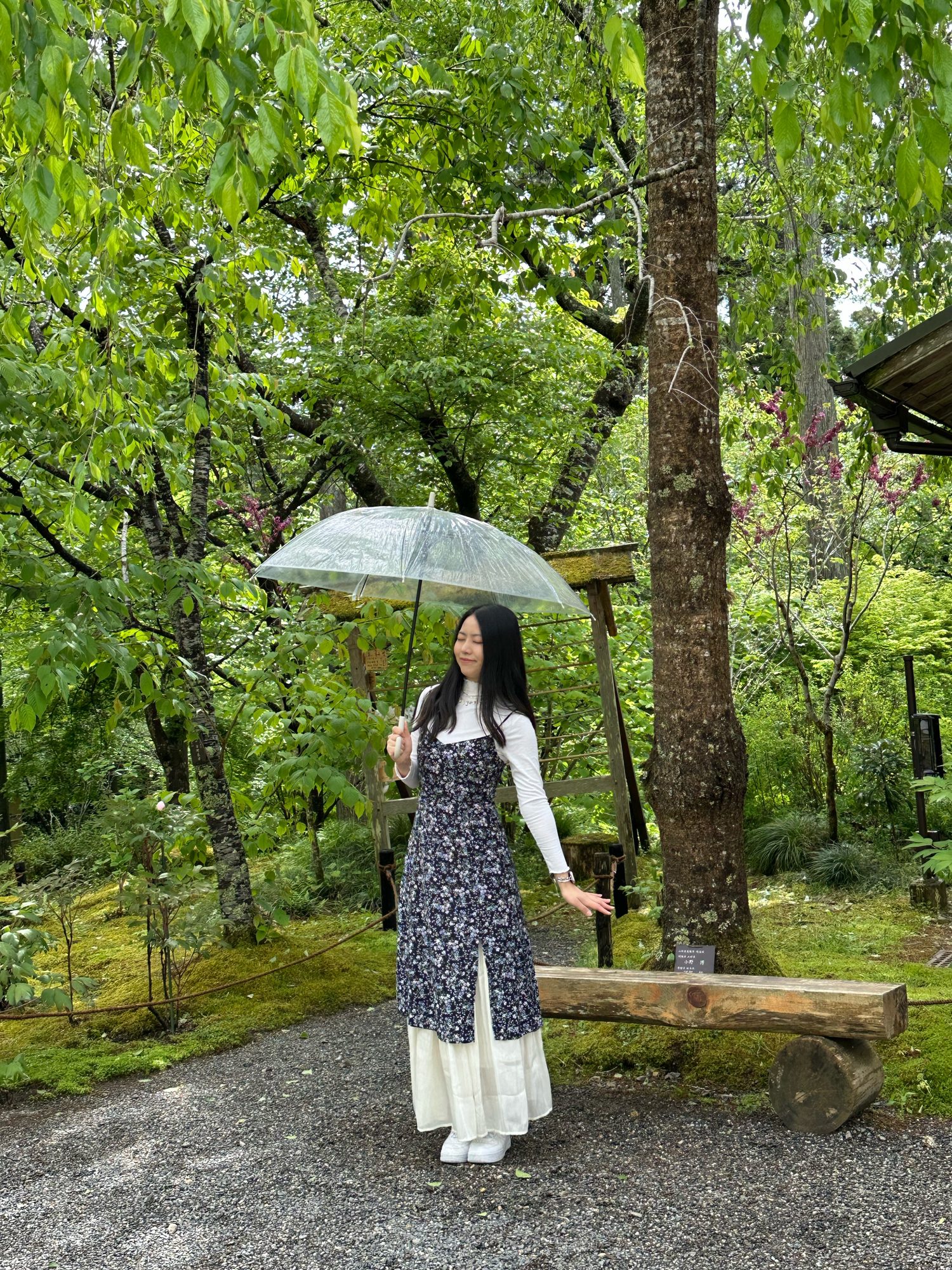
There were so many different shades of green that I kept stopping to look around.
Japanese has an old name for almost every one of them. These are the nearest traditional colours to a few spots in this frame.
Some places impress you with their scale.
Sanzen-in was beautiful in a much quieter way.
A little patch of moss, a weathered stone, the way the light fell across a garden. I found myself paying attention to things I might normally walk straight past.
And I loved that.
I could have spent hours there, doing very little besides wandering around and looking.
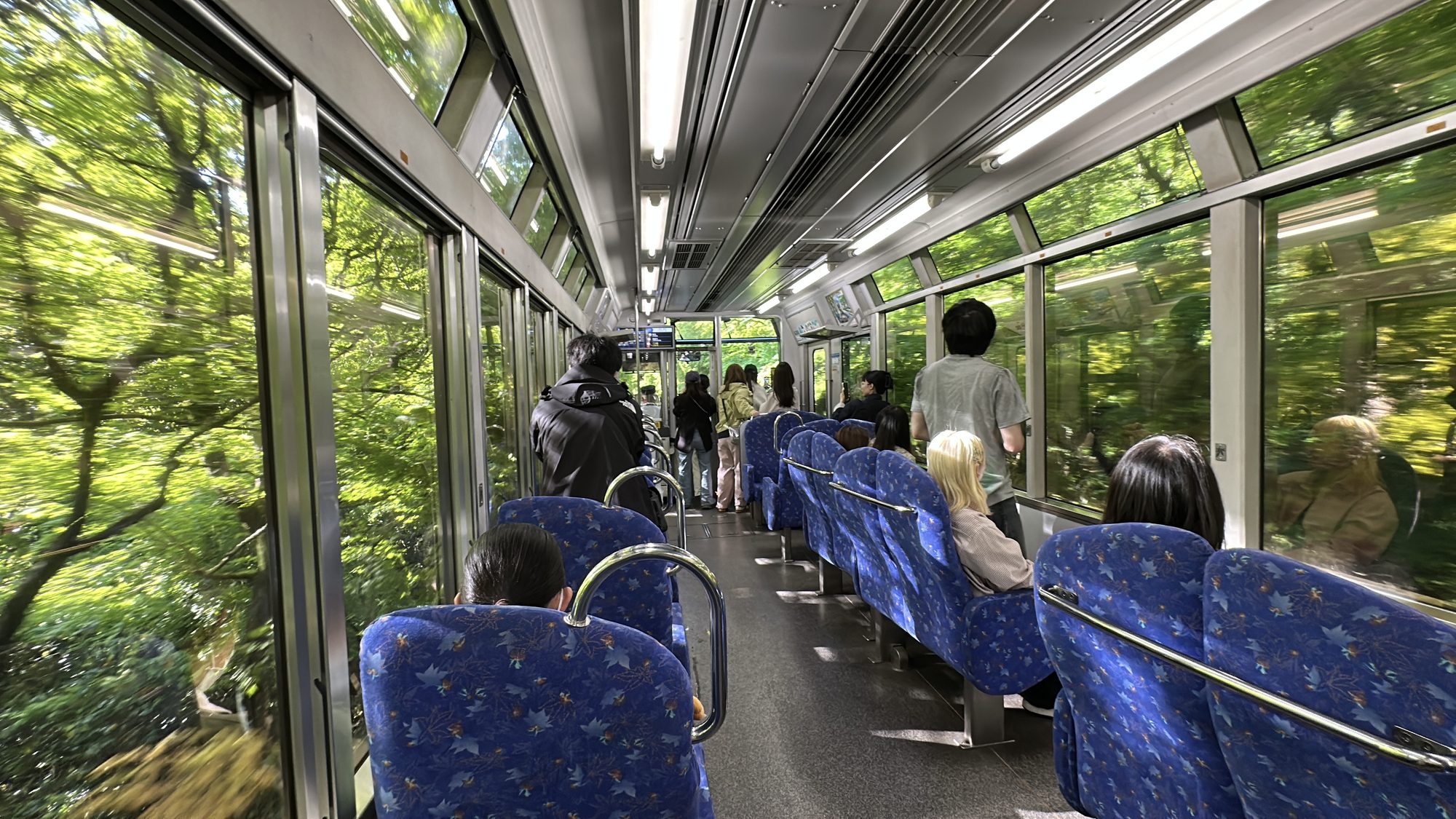
Another memory I treasure is a train ride through the greener parts of Kyoto. At some point, the trees grew so thick along the tracks that the view outside was almost entirely filled with leaves.
For a little while, it felt as though the train were travelling straight through a forest.
I remember looking out of the window and thinking of a Studio Ghibli film.
The kind of scene where a little train winds its way through the countryside, past trees and quiet villages, and you half expect something magical to appear at the next stop.
There was nothing particularly magical about the train itself, of course.
But the view was beautiful, and for a moment, I felt as though I'd wandered into one of those films I'd loved watching.
Learning to Walk in a Kimono
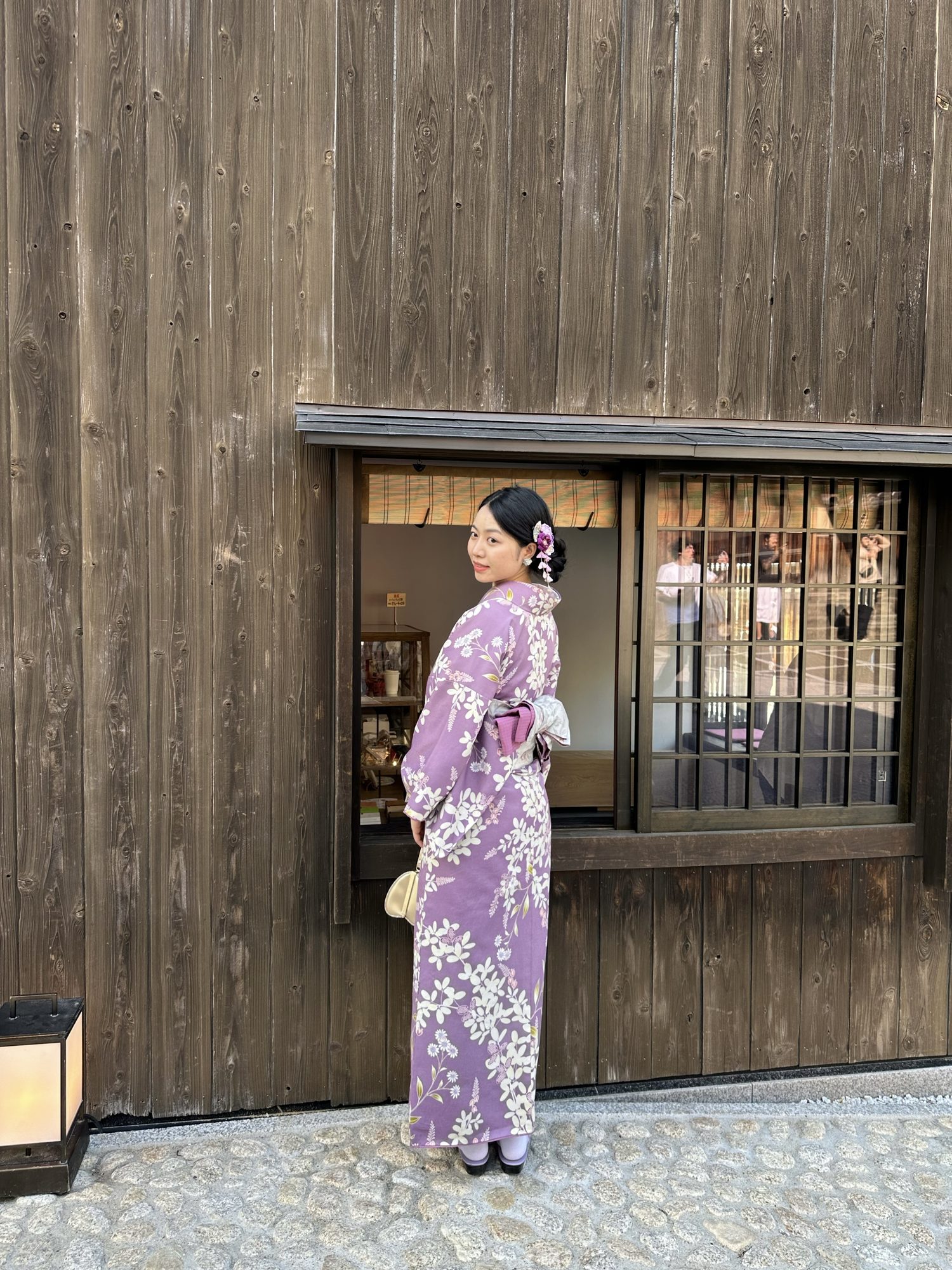
We also rented kimonos for a day around Kiyomizu-dera. I'd seen people wearing them in Japanese films and television dramas countless times. They always looked so graceful, taking these tiny, careful steps as they walked.
I used to think it was simply part of the elegance of wearing a kimono.
Then I tried it myself. And suddenly, it all made sense.
You really can't take very big steps. Between the way the fabric wraps around your legs and the traditional footwear, walking becomes a much slower, more deliberate business.
I remember trying to move a little faster and realising that my outfit had other plans.
So there I was, taking tiny steps along the old stone streets of Kyoto, finally understanding something I'd watched on screen for years.
It made me laugh. It was also rather lovely.
The wooden shopfronts, the narrow lanes, the traditional rooftops: wearing a kimono made the whole afternoon feel a little different, as though I were taking part in the scenery rather than simply looking at it.
Although, given the choice, I would still prefer being able to walk at my normal speed.
The Little House in Kyoto
Now, back to that guesthouse. I'd deliberately looked for somewhere traditional to stay in Kyoto. We'd booked ordinary hotels in Osaka and Tokyo, but for Kyoto, I wanted something different. Somewhere with a bit of character, where we might get a glimpse of what an old Japanese home felt like.
And I found exactly that.
The guesthouse was run by an older couple who introduced themselves as Papa and Mama. They told us the house was nearly a hundred years old.
It had two floors, wooden interiors, sliding doors, and a small courtyard. Everything was beautifully kept. You took your shoes off before stepping inside, and the floors were so clean that I almost felt guilty walking across them.
I loved the feeling of the place.
It was old, but not neglected. Every corner seemed to have been cared for, and the house had the sort of warmth you can't really manufacture.
My favourite part was the living room.
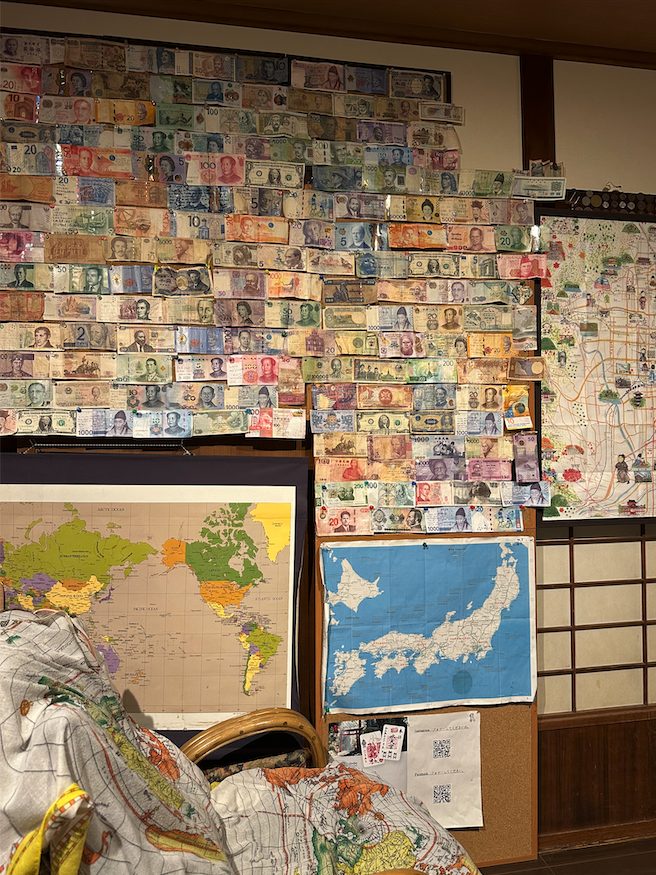
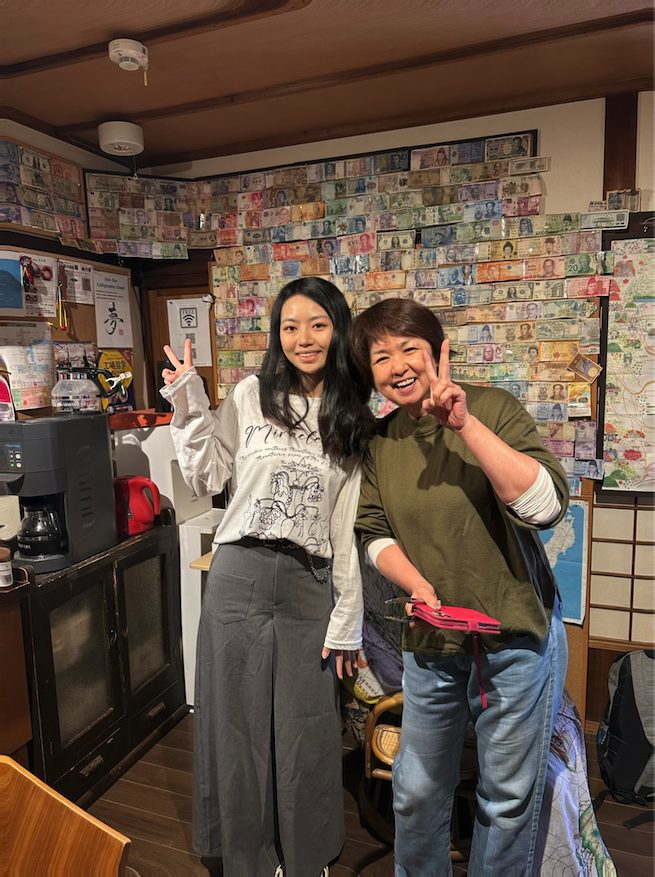
One wall was covered with banknotes from countries all over the world.
Different colours, different languages, different faces and patterns, all arranged together. I thought it looked wonderful. Mama explained that the notes had been given to them by guests who'd stayed there over the years.
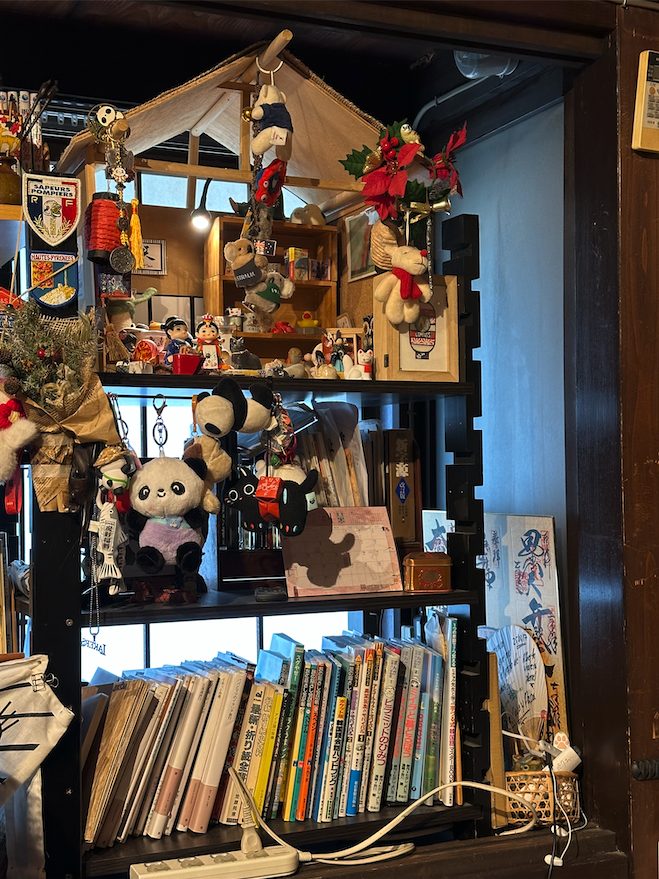
There was also a cabinet filled with little gifts and souvenirs from travellers. I spent ages looking at them.
It was like a tiny museum of people passing through.
Each banknote had once belonged to someone who'd travelled from somewhere else, arrived at this house, spent a few nights there, and eventually moved on.
And before leaving, they'd given the hosts a little piece of home.
I loved imagining all the stories behind those things. Who had brought that particular note? Where had they travelled from? What had they talked about while sitting in this very room?
The house must have seen so many people come and go. And somehow, a little piece of each of them had stayed.
Papa and Mama
The hosts themselves were just as lovely as the house.
Mama was wonderfully outgoing. Her English was excellent, and she seemed capable of striking up a conversation with absolutely anyone. It didn't matter where you came from. Within minutes, she'd be asking you questions, telling stories, making jokes, and bringing everyone into the conversation.
Papa was quite different.
His English was limited to a few words and simple sentences, but he always seemed to have the gentlest smile on his face. He would sit with everyone, listening and smiling, occasionally joining in when he could.
I found him incredibly endearing.
And he had a special talent.
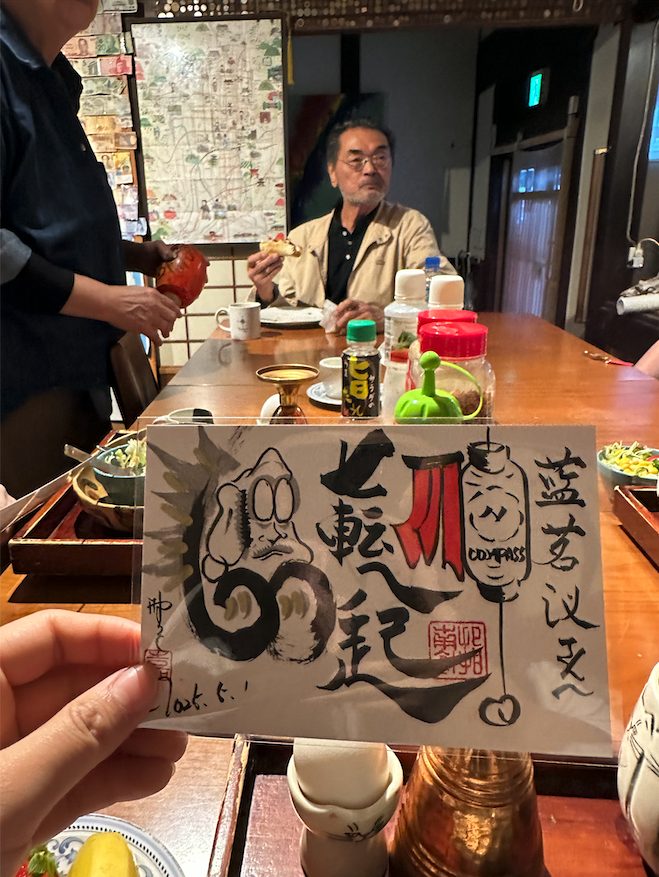
He drew postcards for the guests, adding their names and little handwritten wishes. We received one too. I remember feeling ridiculously pleased with it.
It wasn't an expensive gift, or something that would mean much to anyone else. But knowing he'd taken the time to make it for us made it feel special. I could imagine him sitting down with his pens, drawing little cards for people he'd only just met, giving them something to remember the house by.
It was such a sweet thing to do.
Between Mama's endless enthusiasm and Papa's quiet kindness, they made the place feel less like accommodation and more like visiting someone's home.
Five Countries, One Table
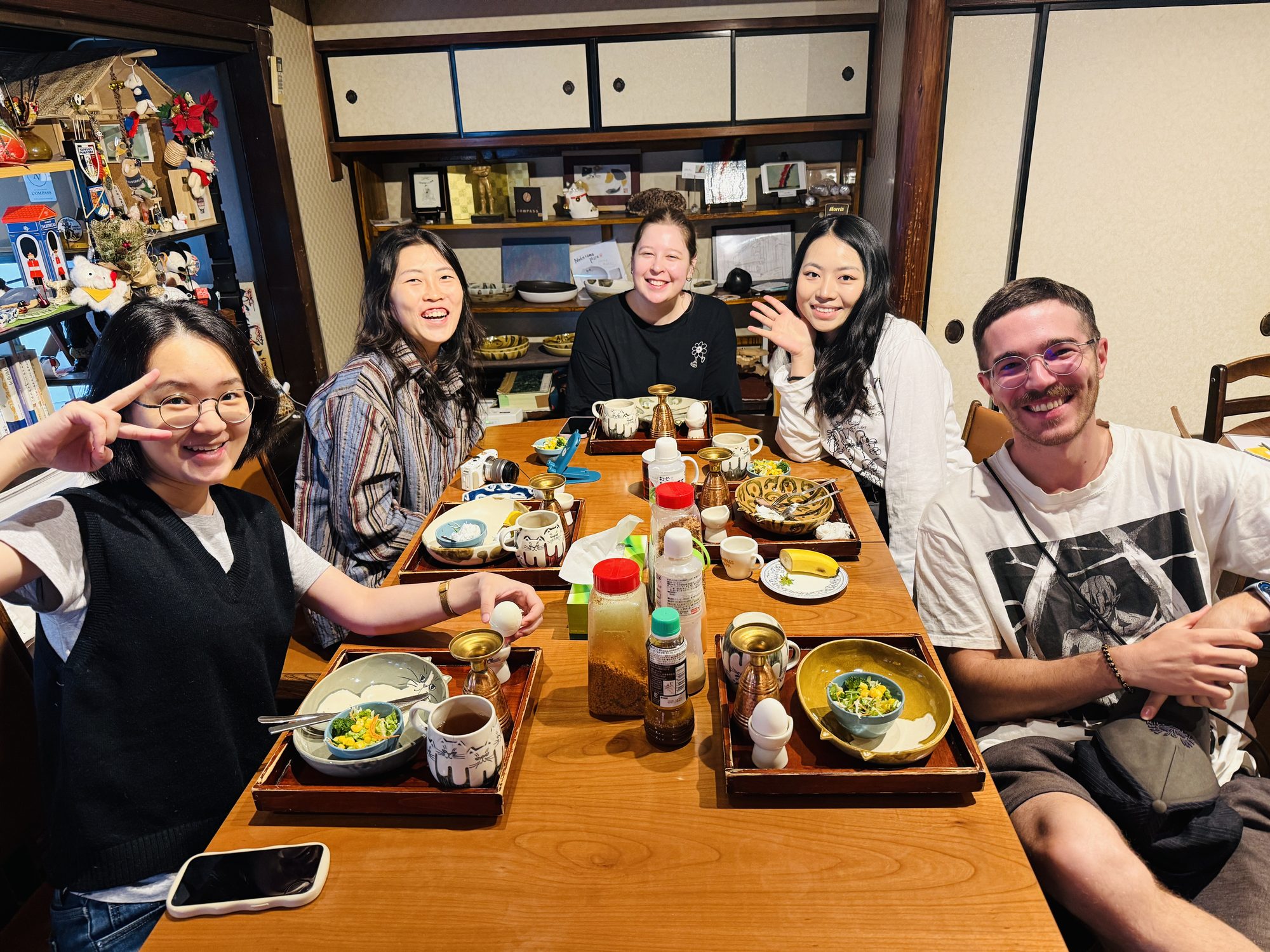
Then came that evening. We'd been out exploring Kyoto all day and returned to find several other guests gathered in the living room. Some were from Italy, some from France, Korea, and Singapore. And then there was us, from China.
Five countries represented around one table in a little Japanese guesthouse.
Mama, naturally, was right in the middle of it all. We talked about our travels, where we were from, what we'd been doing in Japan, and all sorts of other things that I can no longer remember.
Some people spoke more English than others. Sometimes someone had to repeat a word or explain what they meant.
Nobody seemed to mind. The conversation just carried on.
Papa was there too, smiling along, occasionally adding a few words. I remember looking around the table and feeling so happy to be there.
It wasn't a particularly remarkable conversation. We weren't discussing anything profound or having some life-changing cultural exchange.
We were just chatting.
But I loved the randomness of it.
Every person around that table had a completely different life somewhere else in the world. Different homes. Different languages. Different routines. Different reasons for being in Japan.
And yet, for that one evening, we'd all ended up in the same room.
Tomorrow, some of us would leave. We'd catch trains, take flights, move on to the next city, and probably never see one another again.
But that night, we had a table to share and a few hours to get to know each other.
I think moments like that are one of the reasons I love travelling so much. Not just seeing places I've never seen before, but meeting people I would never have met otherwise.
Sometimes you don't need to become lifelong friends or even exchange contact details.
You just get to step, very briefly, into someone else's world.
And for a few hours, the world feels a little smaller.
Tokyo was our final stop. After Kyoto, it felt like switching to an entirely different setting.
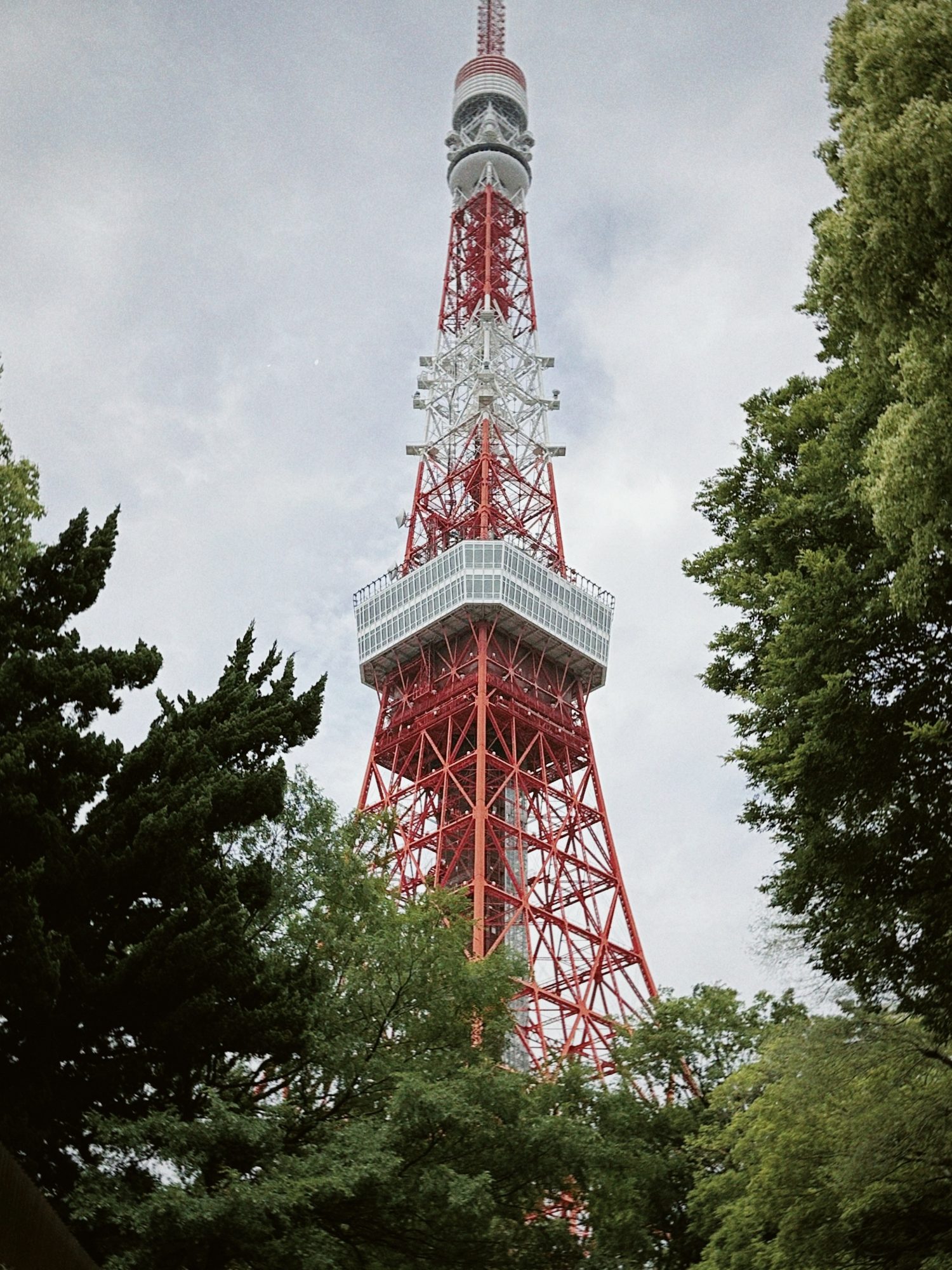
The city was bigger, busier, and much more modern. We visited Tokyo Tower, explored shopping streets, and wandered through neighbourhoods full of stylish little boutiques, designer shops, and cafés.
There was so much to look at.
I loved the attention to detail in the shops, the fashion, the architecture, and the way even small spaces seemed to have their own carefully considered aesthetic.
Tokyo had an energy of its own.
You could spend days exploring different neighbourhoods and still feel as though you'd barely scratched the surface.
I enjoyed it, but I found myself thinking about Kyoto.
About those quiet gardens, the old stone paths, and the train moving through the trees.
And, most of all, about that little guesthouse.
Somewhere in Kyoto
When I look back on Japan, there are plenty of things I remember fondly.
- The pure fun of Universal Studios in Osaka.
- The endless green of Sanzen-in.
- Walking rather awkwardly in a kimono.
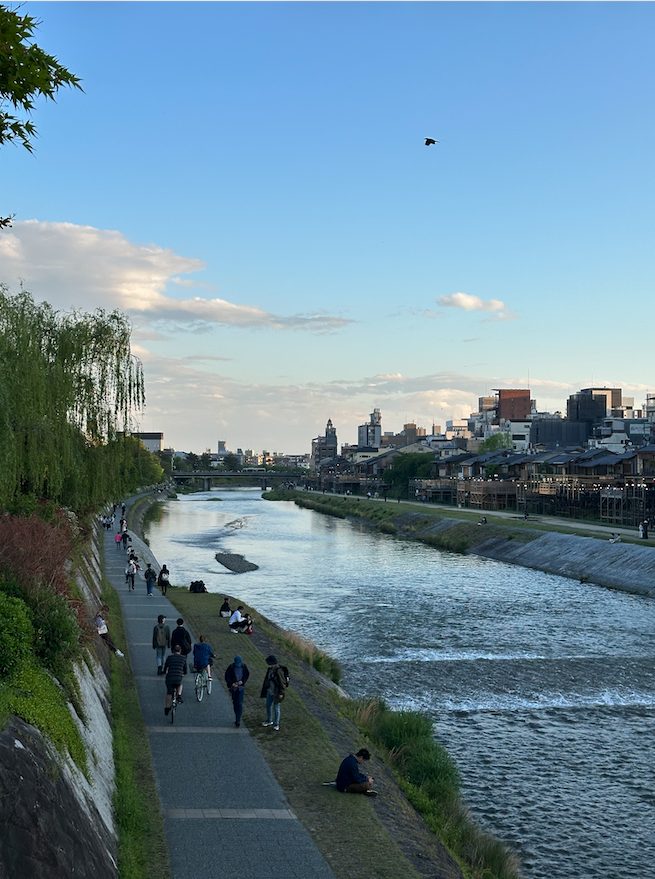
- The beautiful streets of Kyoto,
- and the bright, fashionable energy of Tokyo.
But the memory I return to most often is still that house.
The wall of banknotes. The little courtyard. Mama chatting away in the living room. Papa smiling and drawing postcards.
And that evening when five different countries somehow found themselves sitting around the same table.
I wonder how many people have stayed there since.
Perhaps the wall has a few more banknotes now. Maybe there are new souvenirs in the cabinet, new postcards being drawn, and new conversations happening in the living room.
I like imagining that.
The house is still there, welcoming people from places its owners might never have visited themselves. People arrive, stay for a little while, share something of their lives, and leave a small trace behind. Then someone new comes along.
It's such a lovely thought.
I went to Japan expecting beautiful temples, interesting cities, and plenty of things to see. And I found all of those.
But somewhere in Kyoto, I also found a little house that reminded me how much I love the simple pleasure of meeting people from different corners of the world.
For one evening, the world felt small enough to fit around a table.
And I think that's what I'll remember most.