Stories, Poems & the Wider World
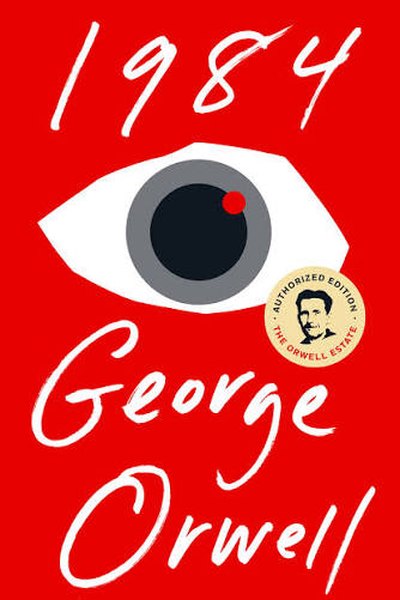
1984
Imagine your job is rewriting old newspapers. If the Leader's prediction last year turned out wrong, you change last year's paper so he got it right. If someone "disappears," you erase him from every photo and file as if he never existed.
That's Winston Smith's job. He works at the Ministry of Truth in Oceania, where telescreens on the wall watch him around the clock and posters everywhere announce that Big Brother is watching. The Party has three slogans: War is Peace, Freedom is Slavery, Ignorance is Strength. It's also building Newspeak, a language designed to shrink every year, until a thought like "rebellion" can't even be formed.
Winston secretly buys a notebook and starts writing words he shouldn't. He falls for Julia, another quiet rebel, and they rent a little room above a junk shop where they believe there's no telescreen. I won't tell you what happens next.
When the book came out in 1949, one reviewer said its real horror wasn't that it predicted the future, but that readers could recognize Winston's situation in their own present. More than seventy years later, that still holds.
Who controls the past controls the future. Who controls the present controls the past. When I read Flatland and got to the part where the Circles ban color words for everyone but a few, under heavy penalty, this was the first line that jumped into my head. Erasing a word is more thorough than erasing a person.
When language narrows, thought narrows with it. The logic of Newspeak still sends a chill down my spine. You don't have to forbid people from thinking something. You just take away the words they'd need to think it.
Orwell feared banned books. Huxley feared no one would want to read. That's the contrast Neil Postman draws in Amusing Ourselves to Death, and both futures are happening at once: one runs on fear, the other on entertainment. The best way to read 1984 is to finish it and ask yourself which one your own world looks more like.
Read it if "dystopia" sounds like just a fiction genre to you, or if words like "filter bubble" and "deleted post" have started to feel normal. It will make them feel unsettling again.
Freedom is the freedom to say that two plus two make four.