Thinking, Writing & Other People
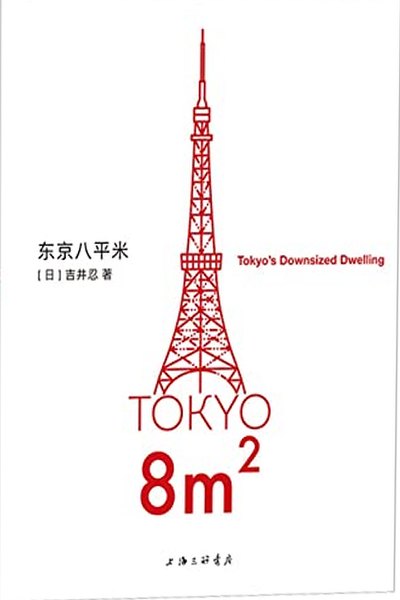
Eight Square Meters in Tokyo
How big is eight square meters? In Japan it's called yojōhan, four and a half tatami mats: roughly a double bed plus a walkway.
Shinobu Yoshii is Japanese. She came to China as a student, became a financial journalist, lived in Shanghai and Beijing for years, and writes in Chinese. After her marriage ended, she went back to Tokyo with one small suitcase and rented an eight-square-meter room: close to the subway, no bathtub or shower, no washing machine. The book, published in 2022, is about starting over in that room.
Because the room is so small, every basic need pushes her out the door. She bathes at the local sento, the neighborhood public bathhouse. She does laundry at the coin laundromat. She eats, reads and daydreams at the corner kissaten, the old-school Japanese coffee shop. She goes to late-night indie films, listens to rakugo comic storytelling, takes shamisen lessons. And she keeps up a "more than strangers, less than friends" kind of relationship with a coffee shop owner who only opens from the small hours until morning, the woman who runs the bathhouse, the older ladies she runs into at the laundromat.
Your home can be tiny if your city is big enough. Her eight square meters isn't ascetic minimalism. She shrinks her living space to the minimum, then fills her life back up with the city's shared spaces.
Everyone has an "eight square meters" inside. It isn't a floor area. It's a place where you don't have to pretend and can face yourself honestly.
Convenience has cost us chance encounters. The more we can solve with one tap, the less hassle we have with strangers, and the fewer surprise meetings we get, too.
Minimalist lives always move me. If someone can live that simply, it means things don't have much of a hold on her. She doesn't want more than she needs, owns very little, and still feels full and content inside. To me, that's a kind of wholeness.
One scene stayed with me. Yoshii wanders the streets, pushes open the door of a coffee shop, chats with the owner while ordering, and a friendship begins. Meanwhile, the way we usually do it: search Xiaohongshu (China's Instagram-meets-Pinterest) for coffee shop recommendations, go straight there, get told flatly by the server "you can order with the QR code," drink, take the photo, leave. We call it daka, "checking in," and it's the same word used for clocking in at work. Even going for coffee has become a shift.
She writes that she wants to quietly dedicate the book to anyone about to build a new life. If we know what we want most, we won't get swept into the busyness of wanting everything and forget what we were after in the first place. Maybe the life you want isn't as hard to reach as it seems.
Read it if you're starting over in a new city, or a new chapter of your life.
Your smallness isn't a problem, because the world outside is big enough.