Thinking, Writing & Other People
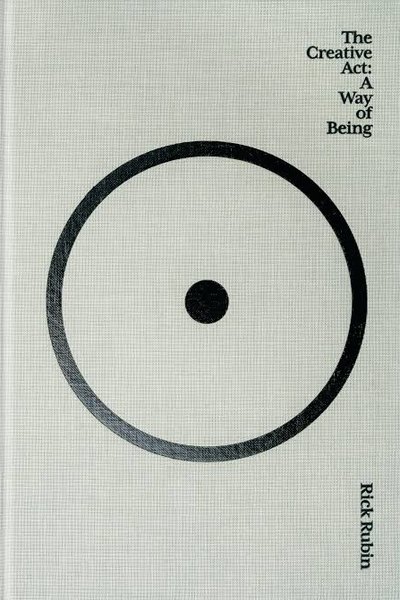
The Creative Act: A Way of Being
A legendary producer who has made records with Johnny Cash, the Beastie Boys, Adele and Jay-Z went on TV and said he has no technical ability and knows nothing about music.
That's Rick Rubin, who co-founded Def Jam out of his NYU dorm room. He said it in a 2023 interview with 60 Minutes, then added that he knows what he likes and what he doesn't, and he's decisive about it.
His value isn't in what he can play. It's in what he can hear. This book is decades of that listening, written down: 78 short chapters, a few pages each, in sentences so spare they read almost like poetry. It won't teach you to write a song. It's about how to live in a way that keeps you making things.
Everyone is a creator. That's the whole first chapter. Creativity isn't reserved for artists. How you spend a day, cook a meal, write an email: you're making something.
You don't invent inspiration. You receive it. Rubin calls the place ideas come from "the Source." You're an antenna; the work is already in the air, and your job is to tune in and let it pass through you onto the page. That sounds mystical, but day to day it's very concrete: pay more attention, write more down, judge less and later.
Plant a lot of seeds. He breaks the process into stages: gathering seeds, experimenting, crafting, completing. Early on, don't decide which idea is good. Collect as many as you can. Only when you start crafting do you pick the one with the most life in it.
The audience comes last. This is the most counterintuitive idea in the book, and the most useful. If "will people like this?" is running in your head while you make something, the work goes bland. Make the thing you genuinely want first. Think about the audience at the very end.
Reviews are split. Fans treat it like a bedside scripture for creative work. Critics say it's too abstract and sometimes contradicts itself: keep a daily practice here, break your routines there. I think that's actually how to read it. Don't go cover to cover. When you're stuck, open it anywhere, and there's usually a line that's exactly what you needed that day.
Podcasts, videos, products: they're all about making something out of nothing, and they all hit the same wall. When the numbers are bad, do you still trust your own taste? The book's answer is simple. Be honest with yourself first.
Read it if you're stuck on a project, or keep getting trapped by "what will people think?"
In terms of priority, inspiration comes first. You come next. The audience comes last.