Letting Go & Paying Attention
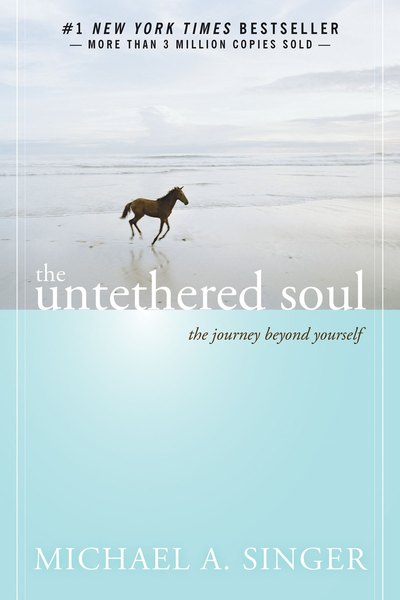
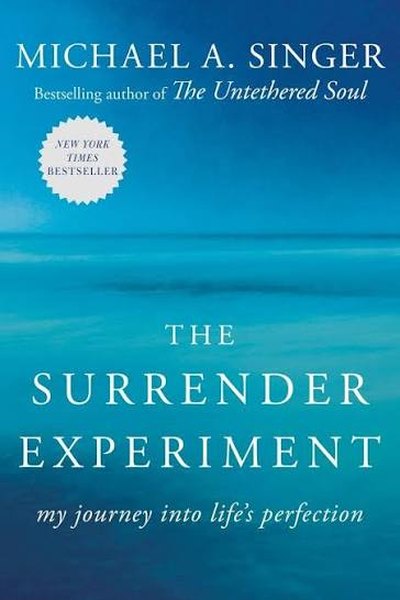
The Untethered Soul + The Surrender Experiment
That voice in your head that never stops talking. Is it you?
I was in a café once when a Taylor Swift song came on. I noticed right away, and the voice in my head started narrating: "They're playing Taylor Swift." If it had been generic background music, I wouldn't have heard it at all. The voice would have moved on to describing something else, like the people at the next table.
That's when it clicked for me. The inner voice works like a zoom lens. Whatever it points at gets magnified. I thought I was looking at the world, but I was only seeing the small patch inside the frame.
This is exactly what the first chapter of The Untethered Soul asks you to do: just hear the voice. If you can hear it, Singer says, then the one talking can't be you. You're the one listening.
You are not your thoughts. You're the one watching them. It sounds mystical, but there's an easy way to test it. Think back to who you were a few years ago. When I look at things I did back then, it often feels like watching someone else's life. Sometimes I can't even work out why I did them. Once the emotions fade, what's left is an observer. That observer, the one who's been watching all along, is the real me.
Don't ask "What should I do?" Ask "Which part of me is uncomfortable?" The moment you ask what to do, Singer says, you've already assumed there's a problem out there that needs fixing. He uses the image of a thorn in your heart. You can spend your whole life arranging things around it: avoiding crowds, never letting anyone get close. Or you can pull it out. Most of us choose the first option.
Nothing is worth closing your heart over. Criticized, so you want to quit. Ignored, so you take your love back. Every time you close up, Singer says, you're throwing away your own energy.
The Untethered Soul gives you the ideas. The Surrender Experiment shows how he actually lived them. Read them back to back.
Singer was born in 1947. While working on a PhD in economics at the University of Florida, he went through an inner awakening and moved into the woods to meditate. All he wanted was quiet. Then he gave himself one rule: if life puts something in front of me, and the only reason I'd say no is personal preference, I'll drop the preference and let life decide.
What followed reads like a real-life Forrest Gump, or Jim Carrey in Yes Man. The university told him he'd signed up by mistake for an extra exam in public finance, a subject he hadn't studied. He decided to sit it and accept failing. The night before, he flipped open the textbook and read a few pages three times. The next day, three of the six questions were answered on those exact pages. Someone started building a house on his land without asking, so he put on a tool belt and helped. He fell for one of the first personal computers in a RadioShack, took it home and taught himself to code. Later, two medical clients called asking him to build billing software. He didn't want the job. He took it anyway. That software became Medical Manager, which grew into a leading practice-management system in American healthcare. The company went public and was later folded into WebMD.
What moves me most is that he never wanted a company. He wanted quiet. The company grew on its own once he stopped insisting on what he wanted. It's not all fairy tale, though. In 2003 the FBI raided his company and he got pulled into a securities fraud investigation that dragged on for years. In 2010 it ended with a deferred prosecution agreement, and the charges were dropped. He writes that on the day of the raid, a deep calm settled over him like a blanket.
Honestly, The Surrender Experiment hit me hard when I finished it, and two weeks later the feeling had faded. I've decided that's fine. This isn't a book that enlightens you on the last page. It's the one that pops back into your head every time you start fighting reality again. And surrender isn't giving up. He did every job with almost obsessive care. He just stopped being picky about which job landed in front of him.
Read them if your mind won't stop running, or if you keep arguing with things that "shouldn't have happened."
Do not let anything that happens in life be important enough that you're willing to close your heart over it.